A Bold New World

WINTER PHOTOGRAPHY IN THE POLAR CIRCLE

Dance of the Green Dragon | Lofoten, Norway

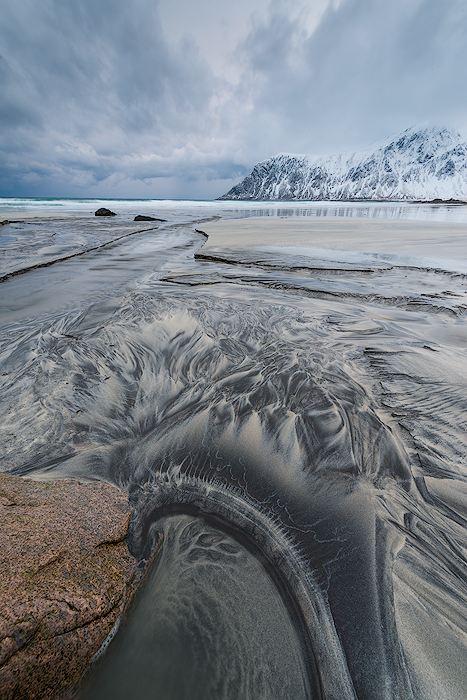
Labyrinth | Lofoten, Norway - A maze of fascinating sand patterns made the perfect foreground for the distant snow capped mountain peaks during my recent Norway photography tour. This quiet stream flows directly into the ocean and the large, broken ice patches were too inviting to pass up. Sometimes you wait for what seems like an eternity for clear skies when shooting in the polar circle, but when it clears the sunrises are nothing short of spectacular. This was one of those days.

It is hard to believe that two months have past since I returned from leading back to back photography tours in Iceland and Norway. I had a great groups of dedicated photographers for both destinations and we enjoyed shooting in some incredible conditions. People generally have one of two reactions when they consider the thought of participating in a photography tour to a colder climate. There are those that will jump at the chance relishing the challenge and new experiences, asking eagerly, ‘Where do I sign up?!’ The remaining personalities typically respond with ‘Over my dead body!’ or mutter something about how they’d turn into an icicle. Another objection I’ve heard is fear of the damage their camera will suffer from the snow. First of all, if your equipment is worth its salt then it should be able to manage a little dusting of snow. The main risk with camera gear in a colder climate is extreme temperature changes. If you you allow it to gradually adjust then you shouldn’t have any problems.

Nordic Dreams | Iceland - During my recent Iceland Winter Photography Tour we visited a few different locations looking for the elusive aurora borealis, including the mighty Skógafoss waterfall. The Northern Lights never danced for us here, but a moonbow put on a show all its own. Later over Vik we were rewarded with a beautiful aurora display. Iceland is a land full of wonders!

Keeping batteries in a base layer pocket close to your body should extend their life in the cold when they aren’t in use. Secondly, at the end of the day the simple reality is that their really is no such thing as ‘bad conditions’, just a lack of creativity. We live in an age today when apparel manufactures make gear and clothing that will keep us comfortable in nearly any type of weather or at any temperature. I’m speaking from experience. Last year I led an winter expedition in the Himalayas to photograph Snow Leopards in the wilds of northeastern India. With the the right type of clothing and apparel you can endure some pretty extreme conditions. Finally, perhaps one of the best kept secrets about winter in Iceland (and particularly Norway) is how mild the winters are. The general assumption is that just because it’s in the polar circle it must be frigid. The reality is that almost all of Norway’s coast remains free of ice and snow throughout the year. Norway and Iceland are located along the same latitude as Siberia, Greenland and Alaska, so it is often expected to be a land of bitterly cold weather. However, due to warming influences of the northern Gulf Stream, the country actually enjoys a fairly mild climate. Average daily temperatures in the winter are typically above 32°F or 0°C. The good news is that this rampant misconception drastically reduces that number of photographers that visit these Nordic regions during the winter months, leaving it for groups like mine to enjoy. Once you’ve experienced and shot these locations in the summer, winter is a whole new experience. Like peeling back that layers of an onion, winter removes all the ‘fluff’ from the landscape and leaves one composing from a raw, rugged scene… and it is breathtakingly beautiful. I’ll be returning to lead my two Iceland Summer Photo Tours in July and I’ll be off again in September to lead my Norway Autumn Photo Tour. Below are just a few more examples from my winter tours, if you’d like to see more visit my Iceland Portfolio or my Norway Portfolio.

Your thoughts and comments are always welcome.

Nathaniel

Scream of the Sea | Lofoten, Norway - This image was captured on the upper northwestern side of the Lofoten peninsula. The weather was extremely dramatic and while we were there it began to snow. The raging ocean crashed harder and harder into rocks with the rising tide. I sat and stared for a long time before going to work on this composition. I listened to the gusting wind as it drove tiny white snowflakes through the air like so many small darts. I watched the surf dash onto the coast churning white froth all over the shoreline. There were so many different emotions at work in the scene. When I finally began to shoot it all went silent, but the sea still let it’s voice be heard visually with this striking face in the foaming water below… Unforgettable.

Flow | Iceland - There are few things that I enjoy more than spending time alone with a camera surrounded by nature. However, there is certainly something to be said for sharing the magic of the outdoors with fellow photographers. For some it’s the moment they see a new country or species the first time that they have longed to witness for years. For others that have been to a destination before, it’s like taking them back to visit an old companion. Each time that I lead a tour to the Nordic countries I look forward to sharing the magic of that region with friends both old and new, and with you all. This is a large chunk of glacial ice getting caught in the rushing tide that was photographed on a black sand beach in eastern Iceland. I hope you enjoy it.

Ribbon Candy | Lofoten, Norway - At times hunting for the northern lights can be a bit like an emotional roller coaster. Typically I will have been up early that morning shooting sunrise and then out in the mid afternoon for sunset. After a warm meal for dinner one usually just wants to curl up on a couch and fall asleep looking at the images from the day. But the chance of seeing the beautiful aurora coaxes me back out into the dark and the crisp, winter air. Trudging through the snow or along a dark roadside thoughts of doubt creep into your mind and whisper that you’re wasting precious hours you could be sleeping searching for a phantom. And then suddenly from out of nowhere the sky explodes into into vibrant, changing patterns of color. In that moment all thoughts of sleep rush out of your your mind and adrenaline courses through your body. For a minute you forget to even shoot. All the tired muscles and sore joints in your body are forgotten as you bask in the glorious display of one of the natural worlds greatest phenomena. Nature’s therapy at its best.

Explosion | Iceland - There are certain locations that regardless of how many times you visit, it’s like a new experience every time. Iceland is one of those. This image was made at dawn on the beach in Vik, and while most are drawn to photograph the ancient sea stacks there, the surf is a subject unto itself. This area tends to experience some of the island’s more dramatic weather systems and the towering waves are astonishingly powerful. Exercising extreme caution here is of the utmost importance as sleeper waves often surprise tourists and can be deadly. The small black flecks that you see in the crashing wave here are actually fist-sized stones… just to give you an idea of how powerful the ocean is on this beach.

Arctic Pastels | Lofoten, Norway - Hamnoy is the oldest fishing village in the Lofoten Archipelago, and though small, it is undeniably beautiful. Considered by many to be to be one of the most picturesque villages in the region, Hamnoy is also popular tourist destination due to its scenic, unspoiled nature. This village was only accessible by ferry until bridges were built connecting it to the rest of the peninsula about 35 years ago. During my Norway Photography Tour, participants are accommodated in remodeled fishermen cabins like the red ones pictured here. The oldest one of these was built in the 1890’s. There are few things that compare with staying in a traditional seaside cabin overlooking the coastline and falling asleep to the sound of the ocean lapping against the rocks below. This image was captured during the first sunrise photo shoot of my tour, we were rewarded with a soft pink blush in the clouds just above these iconic peaks.

Winter Oasis | Lofoten, Norway - Ice is often one of the best elements to utilize in a winter scene, however this year many of the large lakes in Norway were covered due to increased snowfall late in the season. The snow cover compromised the stability of the ice which made working around the lakes difficult at times. Adapting to these conditions meant passing on some of the grand compositions with ice cracks in the foreground, and instead finding small hidden ponds like this one just off the beaten path. While shooting in a colder climate certainly has its challenges, with the proper clothing one can remain quite comfortable and and the rewards are great. Winter images are very unique and produce results unlike any other season. This is a favorite area of mine for sunrise in Norway for good reason. And yes, the ice is really that color.

The Gatekeepers | Iceland - Off Iceland’s eastern coastline fantastic rocks protrude from the ocean creating great subject matter for compositions. At this particular location they’re precisely where the sun sets during the winter season. As the sun drops down to the horizon it splits the difference between these two gigantic formations. If the skies are clear, then you’re treated to a beautiful display like this one.

Kelidesope | Norway

Kaleidoscope | Norway Fascinating sand patterns along the shoreline of one of Norway’s many beautiful beaches. Turquoise waters and white sand beaches, Norway is very much like the Caribbean of the North.

Someone recently asked me what we do on my Nature Odyssey Worldwide Photo Tours when the weather changes and the storms blow in. I was puzzled, but smiled and said, ‘That’s often when we do our best work.’ This shot was taken on my sold out Winter Iceland Photography Tour in 2016 with a great group of dedicated photographers. We’ve found some great scenes both in the landscape and the ice caves.

What a beautiful country! This shot was taken on the final day of my Nature Odyssey Worldwide Tours in Norway. A fitting end to what was a week filled with the perfect variety of weather, allowing us to photograph the landscape in all conditions. One of my participants that travels a lot for photography said this was perhaps the best tour they’d ever been on, I couldn’t ask for a better compliment. Thanks to this great group for joining me this Winter, 2016 Photo Tour in Norway!

© 2016 Nathaniel Smalley Photography - All rights reserved.


Award Winning Bird Photography

Chronicles of Nature

Nathaniel Smalley speaking at Audubon Arizona in Phoenix on the topic of Award Winning Bird Photography.

Recently I was requested as the guest speaker at Audubon Arizona’s showcase event in November, featuring award winning images from the 2015 National Audubon Photography Competition. The event was very well attended and I enjoyed an engaged audience as I discussed the topic of award winning bird photography. Due to the popularity of the topic, I chose to compile some of my notes into a blog post here.

Though I haven’t personally invested a lot of time entering my work, I have been asked to be a judge for a number of different nature photography competitions including the distinguished Natures Best Photography - Africa (a division of Nature’s Best Photography), Viewbug.com and others.

Birds were my door into photography way back in high school. These days I rarely go anywhere for the sole purpose of watching birds, but that hobby helped shape my career as a professional nature photographer, and as a result birds will always hold a special place in my heart. I now carry a camera in place of my binoculars when out looking for avian subjects. So you might ask, what am I looking for when I photograph birds? Creating successful bird photographs requires one or more different elements in our composition. Obviously there are many that could be listed, but for the sake of simplicity I’ve limited it to 10 elements. In the caption of each photo in this article I have detailed the main elements from this list have been utilized in my photographs. They are as follows:

- Action | Behavior | Humor | Personality | Friendship | Light | Perspective | Habitat | Depth of Field | Nostalgia -

Despite popular opinion, bird photography isn’t all about having a big lens. While it can certainly help achieve certain images, there are many creative ways to photograph birds that certainly require more effort, but produce great results. This image of a Great Blue Heron in flight was taken with my 70-200mm zoom lens and a teleconverter making it effectively a 400mm lens. Capturing this image came down to being prepared for the bird as it flew in front of me, as opposed to having a piece of high powered glass.

Full Flight |Great Blue Heron

Great Blue Heron - This bird in flight image utilizes action. Camera: Nikon D700 & Nikon 70-200mm Lens w/ 2x Teleconverter - Iso 1,000 | f-5.6 | 1/1600 sec. @ 400mm

To further illustrate my point I want to show you the image below. This is perhaps the most popular photo I’ve ever taken. What camera was it taken with? My Sony Cybershot Point & Shoot, 8 megapixel camera! Sure, it’s not a bird photo, but it proves a point; Creativity and being passionate about your subject trumps expensive equipment every time.

  • -This image was licensed by Nikon for a corporate presentation.
  • -It has been shared to every corner of the world.
  • -Published in international magazines and used in multiple articles.
  • -Occupied 1st place on 500px ahead of over-saturated landscapes and photos of half-naked female models.


Nathaniel’s infant son Dimitri at one week old - Iso 400 | f-2.8 | 1/25 sec. @ 6mm

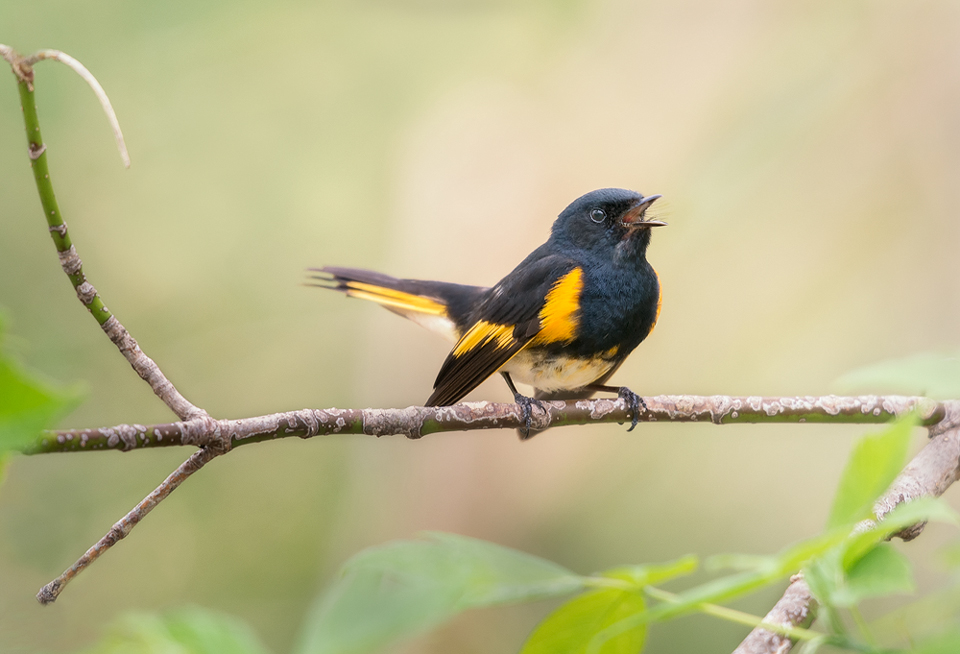
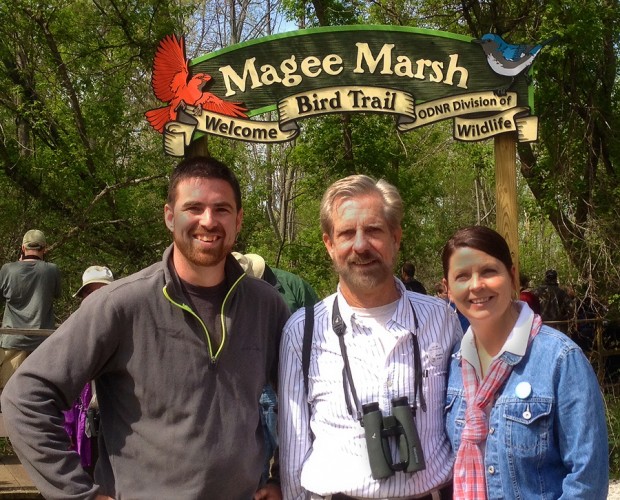
So the next logical question then is how does one get close enough to these subjects without spooking them. Birds tend to be very skittish of humans, and for good reason, in fact I’m wary of humans at times myself! When we photograph birds and wildlife we want them to be relaxed and in their natural state. I’m strongly opposed to using bait to lure in wild subjects, but that’s a whole topic in and of itself. (If you would like to read more on the topic of baiting birds and wildlife click on this link). I also refrain from using calls and recordings. As much as possible I want my wild subjects to be acting out their normal behavior patterns as though I was not present. This is when I capture my best images. The longer we sit still and the more we blend into our surroundings the more comfortable birds become with our presence and the closer they will come to us. The clothing colors that we wear can effect how birds react to our presence. Stay away from whites, reds, yellows and other brightly colored clothing, these colors are often associated with danger in the natural world. Instead choose earth tones or even camouflage. Bird blinds are another option allowing us to photograph birds without being detected. Many species are much easier to photograph in the spring when they spend a majority of their time singing, displaying their bright breeding plumage and engaged in territorial disputes. Sometimes a bird will be all but oblivious to human presence during this time of the year as they’re so preoccupied with finding a mate and defending their turf. Below is an American Redstart singing his heart out at Magee Marsh, along the shores of Lake Erie in Ohio. Magee Marsh is a bird photographer’s paradise!

Songs Of Spring | American Redstart

American Redstart - This image illustrates behavior & action. Camera: Nikon D800e & Nikon 600mm Lens w/ 1.4x Teleconverter - Iso 1,250 | f-7.1 | 1/250 sec. @ 850mm

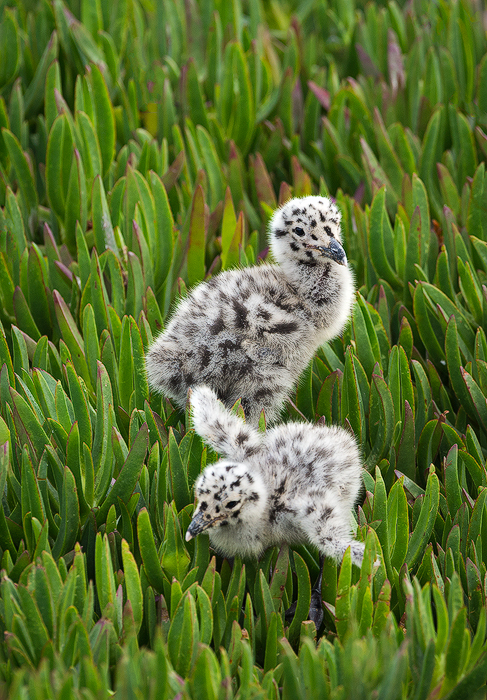
Twins | Herring Gull Chicks

Herring Gull Chicks - This image utilizes friendship, habitat & perspective. Camera: Nikon D4s & Nikon 600mm Lens - Iso 800 | f-8| 1/500 sec. @ 600mm

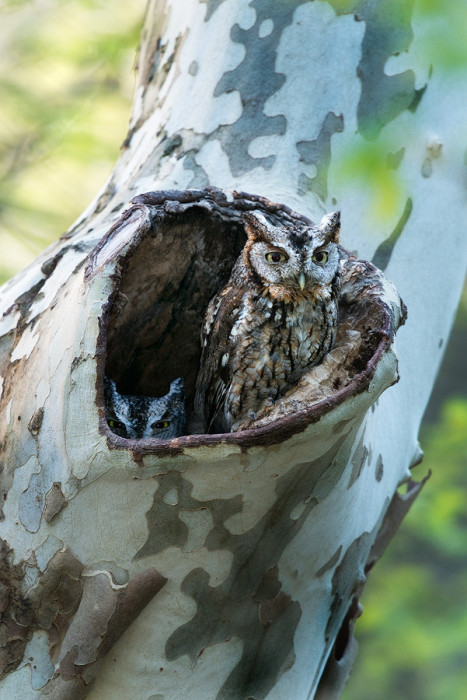
A Hole For Two | Eastern Screech Owls

Eastern Screech Owls - The image utilizes friendship & habitat. Camera: Nikon D800e & Nikon 600mm Lens w/ 1.4x Teleconverter - Iso 1,250 | f-8 | 1/60 sec. @ 850mm

Conversely, nesting season can be one of the most difficult times to photograph birds, as they are trying to be secretive and all their attention is consumed with feeding their young. While nest sites can be intriguing to photograph, one should take extreme caution to do so at a safe distance so as not to stress or make the birds feel threatened. No photograph is worth rising the welfare of the nestlings, regardless of how cute they are.

Even the most common species are popular as babies, like this pair of Herring Gull chicks (above right) navigating through a large patch of ice plant on the California coastline. For this image I climbed on top of a railing along the ocean cliff to get even higher perspective (see below). This allowed me to shoot down on my subjects and isolate them in the frame from one another. If I’d shot them straight on then they would have blended together into a fluffy blob with two heads.

Nathaniel on location at La Jolla Cove in San Diego, California © Laurie Rubin

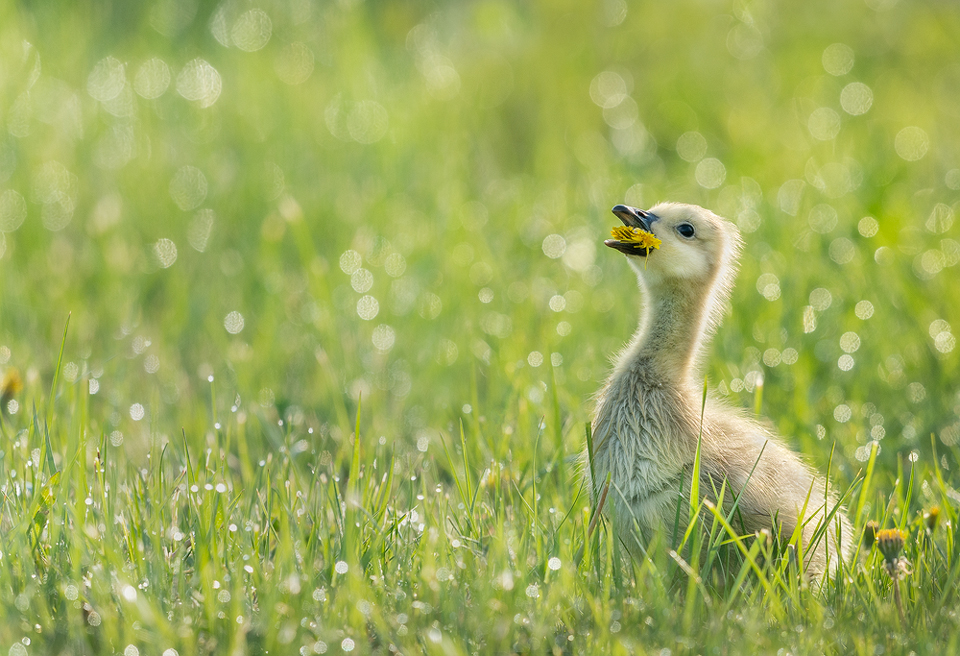
Capturing fledglings in their natural element in great light can produce some really magical results. Below a baby Canada Goose is struggling to put down a large dandelion blossom. The early morning sun on the dew covered grass creates the perfect shooting conditions for an image like this. I got low to the ground on eye level with my subject to help put the size of the surroundings in perspective. Using a shallow depth of field helps to isolate the gosling from the habitat and draws the viewers attention directly to the subject.

Dandelion Delight | Canada Goose Gosling

Canada Goose - This image utilizes light (dramatic), perspective & depth of field. Camera: Nikon D800e & Nikon 600mm Lens - Iso 1,000 | f-6.3 | 1/2000 sec. @ 600mm

Golden Plover chick - This image utilizes perspective & depth of field. Camera: Nikon D4s & Nikon 600mm Lens - Iso 1,000 | f-6.3 | 1/320 sec. @ 600mm

By getting very low to the ground when shooting this Golden Plover chick, the subject appears much smaller and more vulnerable in the overall scene, which is what I was going for. This impression is enhanced by the fact that I centered the subject and composed the bird low in the frame with lots of negative space above it. This image breaks one of the main rules of composition, known as ‘The Rule of Thirds.’ The rule of thirds states that: An image is most pleasing when its subjects or regions are composed along imaginary lines which divide the image into thirds - both vertically and horizontally . This just goes to show that all the ‘rules ‘ of photography are made to be broken.

Unlike the previous example, this image below was composed following ‘The Rule of Thirds’. You can see the owl’s eyes, as the primary point of interest, are located right where the top left intersecting lines meet. This photo has nice balance to it with the double Aspens on the right offsetting the ‘weight ’ of the owl on the left. I’ve used depth of field to manage how much of the surrounding habitat is in focus.

Great Gray Owl - This image utilizes habitat, depth of field & perspective. Camera: Nikon D800e & Nikon 600mm Lens w/ 1.4x Teleconverter - Iso 400 | f-8 | 1/320 sec. @ 850mm

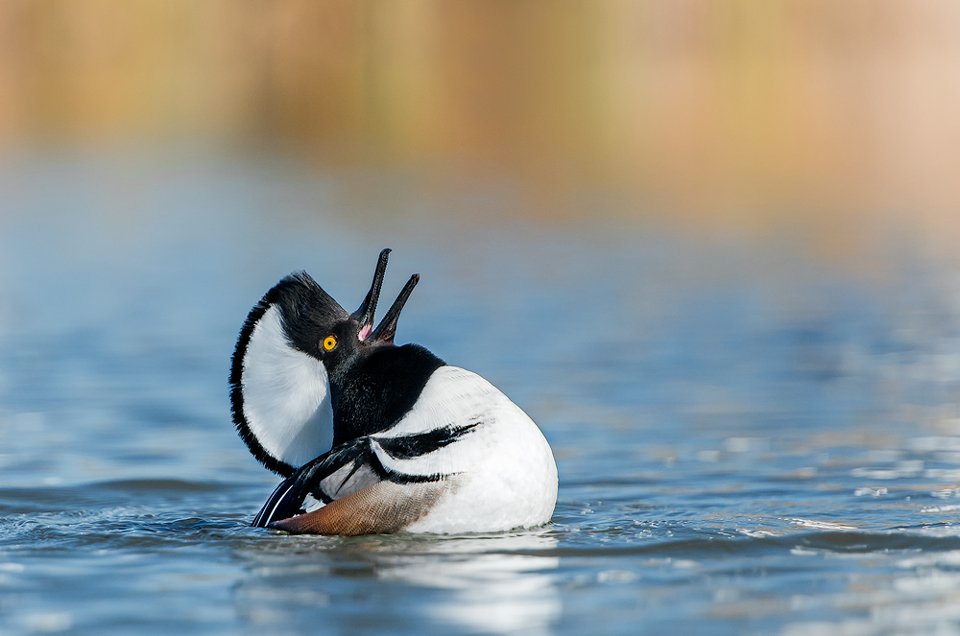
With bird photography almost every image will have more impact if you can get on eye level with your subject. Sometimes photographers don’t put a lot of thought into the angle at which an image is taken, but considering the role it plays in creating a successful image it aught to get far more attention. People are instinctively drawn to an photo taken from an unusual angle. For the image below I had my tripod in the water and was laying down with the upper half of my body stretched out over the edge of the bank to operate the camera and capture this shot. Needless to say that is not a comfortable position to be in, but often capturing the best shot requires a bit of physical discomfort to achieve the desired results.

Hooded Merganser - This image utilizes behavior, perspective, action & light (reflected & direct). Camera: Nikon D800e & Nikon 70-200mm Lens w/ 2x Teleconverter - Iso 1,000 | f-6.3 | 1/1250 sec. @ 400mm

Brown Pelican - This image utilizes fine art & behavior. Camera: Nikon D4s & Nikon 600mm Lens - Iso 1,250 | f-7.1 | 1/100 sec. @ 600mm

A fine art photograph is taken with the goal of creating a work of art. It goes beyond the literal aspect of the scene or the subject photographed and creates an image that shares the photographer’s personal vision, a metaphorical aspect or message. This type of photography is more about making a photograph, not just taking a photograph. Documentation is great for certain types of photography, such as forensics where the purpose is to record the scene in the most literal and factual manner possible, but fine art photography is is about more than just creating a documentary image. While defining exactly what constitutes fine art photography may be impossible, here are a few points to consider in describing it:

  • 1). What a fine art photograph illustrates must be different from what is observed when the shot is taken.
  • 2). The purpose of a fine art photograph is to share the photographer’s personal vision of the scene or subject.
  • 3). When looking at a fine art photograph it’s clear that the photograph was created by an artist and not just by a camera.


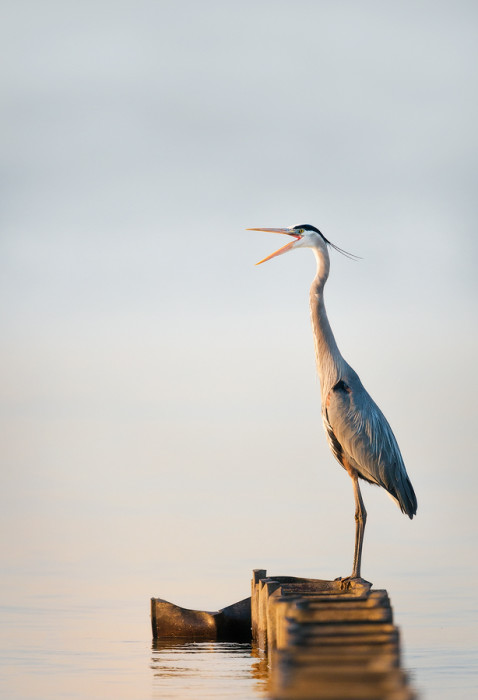
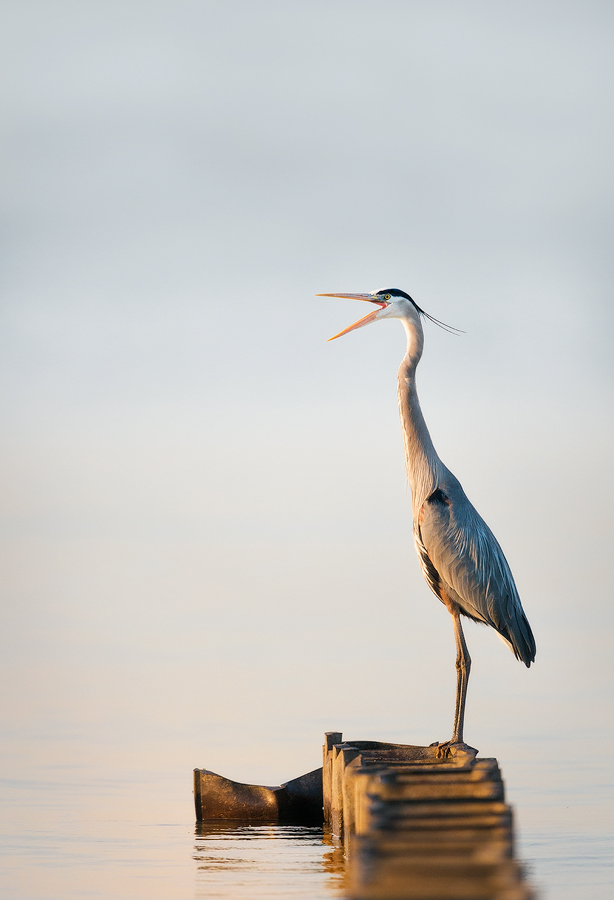
Sunset Salute | Great Blue Heron

Great Blue Heron - This image utilizes action & behavior. Camera: Nikon D800e & Nikon 600mm Lens - Iso 800 | f-4 | 1/3200 sec. @ 600mm

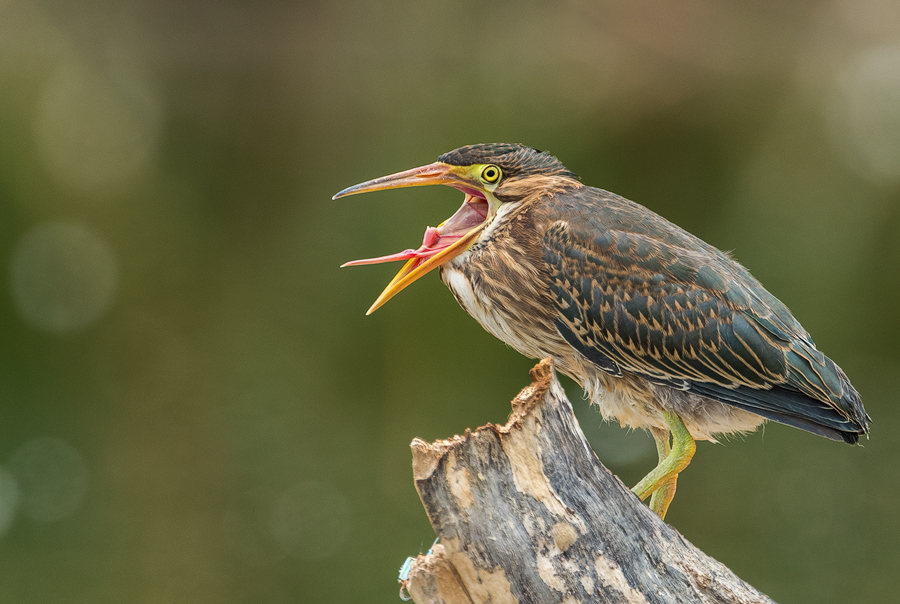
Often after catching and swallowing a large fish a heron will open and close its beak activating its throat muscles and helping it to fully swallow its meal. Knowing of this behavior and watching for it allows you to capture a shot like this one of the Great Blue Heron on the right and gives the impression of a loud audible call from your subject.

That is exactly what I was going for when I took the image below of this Green Heron. It looks as though the heron is screaming at the top of its lungs, when in reality it was simply trying to work down its morning meal.

The Scream | Green Heron

Green Heron - This image utilizes action & behavior. Camera: Nikon D4s & Nikon 600mm Lens w/ 1.4x Teleconverter - Iso 640 | f-7.1 | 1/800 sec. @ 850mm

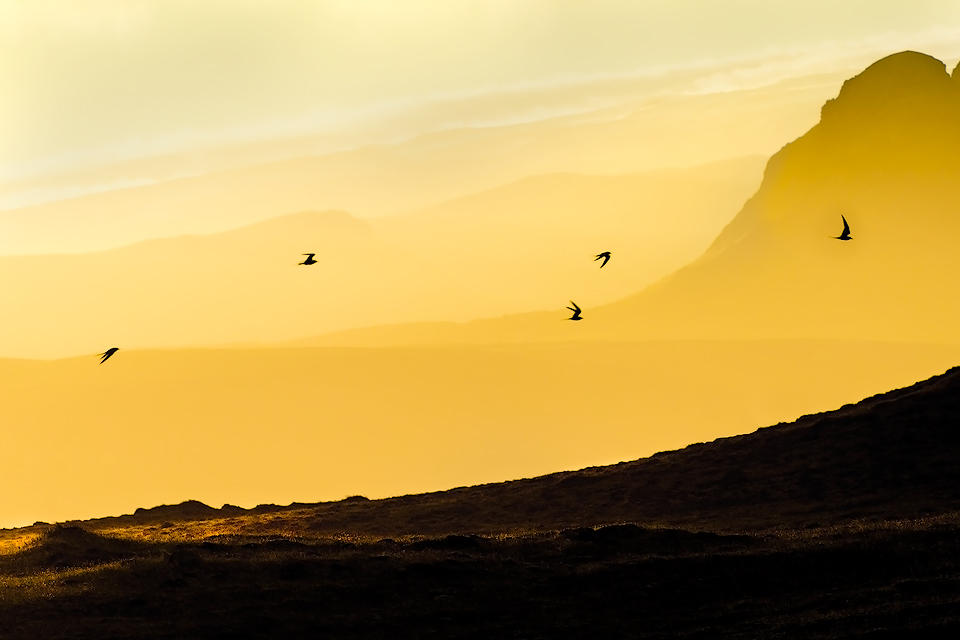
Shooting into a glowing sunset certainly has its challenges as images can easily end up over-exposed. Be sure to take care not to look through the viewfinder when shooting directly towards the sun, use the live view function on your camera if possible. You’ll notice that I’ve composed this image with the sun just to the left of the frame to allow me to shoot while looking through the viewfinder. When the sun is still above the horizon, sunrise and sunset can provide photographers lots of light to work with, and as a result you are able to shoot at faster shutter speeds and freeze motion or smaller apertures for greater depth of field. That is exactly what I’ve done here with this flock of Arctic Terns over the coast of Iceland. In the image below I have taken advantage of the extra light to shoot at f-14 giving me more depth of field in the image and showing more of the layers in the distant hills.

Arctic Terns - This image utilizes action & light (dramatic). Camera: Nikon D700 & Nikon 70-200mm Lens w/ 1.4x Teleconverter - Iso 500 | f-14 | 1/200 sec. @ 220mm

Snowy Egret - This image utilizes light (dramatic). Camera: Nikon D4s & Nikon 600mm Lens - Iso 100 | f-8 | 1/1000 sec. @ 600mm


Back light can give an photo a very special effect and enhance shapes and forms. Back lighting works best when the details on the edges are more important than the colors of the subject. Here a Snowy Egret is beautifully illuminated by an early morning beam of light that perfectly highlights a stray feather on its chest. In a shot like this I’m adjusting my camera settings based on the reading from my camera’s light meter is giving me for the brightest parts in the image. By doing this most (if not all) of the distracting back ground elements fall off into the shadows and help to further isolate and emphasize the subject.


When seeking bird subjects to photograph there are a few questions we can ask ourselves that will aid us in finding them in the best conditions. What is the dominant habitat for the location you are photographing? Researching the region and knowing the geography will aid you in being better prepared for the type of vegetation and/or terrain you’ll be working in. For most bird species the year is divided into different activities (migration, nesting etc.). Understanding what birds are doing at different times of the year will help you learn when is the best time to photograph them. Where do the birds in your part of the world like to nest and feed? Discovering where their food sources are will lead you to the birds. In the image below a Northern Parula Warbler feeds on small insects inside the seed heads of an Alder Tree, knowing this information makes locating my subject more predictable.

Seeds Of Spring | Northen Parula Warbler

Northern Parula Warbler - This image utilizes habitat & light (soft). Camera: Nikon D800e & Nikon 600mm Lens w/ 1.4x Teleconverter - Iso 800 | f-6.3 | 1/1250 sec. @ 850mm

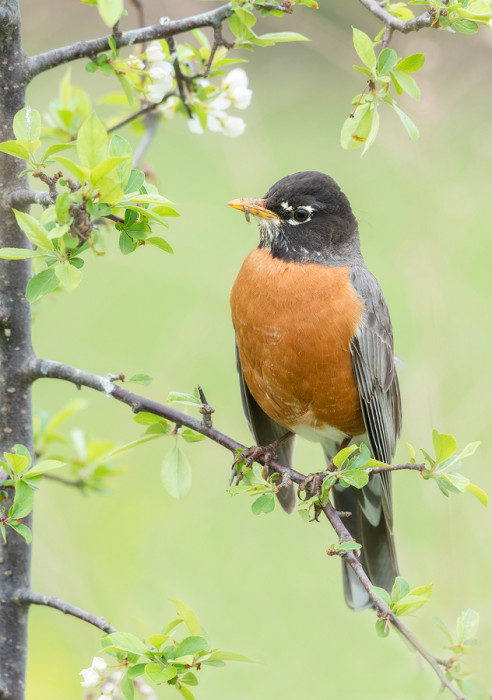
Signs Of Spring | American Robin

American Robin - This image utilizes nostalgia & habitat. Camera: Nikon D800e & Nikon 600mm Lens - Iso 800 | f-8 | 1/200 sec. @ 600mm

Depending on what part of the world you grew up in, seeing a Robin in a blooming Crab Apple Tree can be synonymous with spring and feelings of happiness. Having grown up in New England shots like this one of an American Robin bring back great memories for me personally. Capturing a familiar subject in an identifiable scene often takes a bit of planning, but when it is done right you can create a heartwarming photo that has a lot of appeal in front of the right audience. Photos that resonate with a viewer often do so because there is some nostalgic connection that they have with the image. I can’t track how many times I’ve been told by clients purchasing a print that they were ‘buying a hummingbird photo because their mom loved hummingbirds and the photo reminds them of their mother’, or they simply ‘had to have that print of the ocean because they grew up on the coast and the photo reminded them of home’.

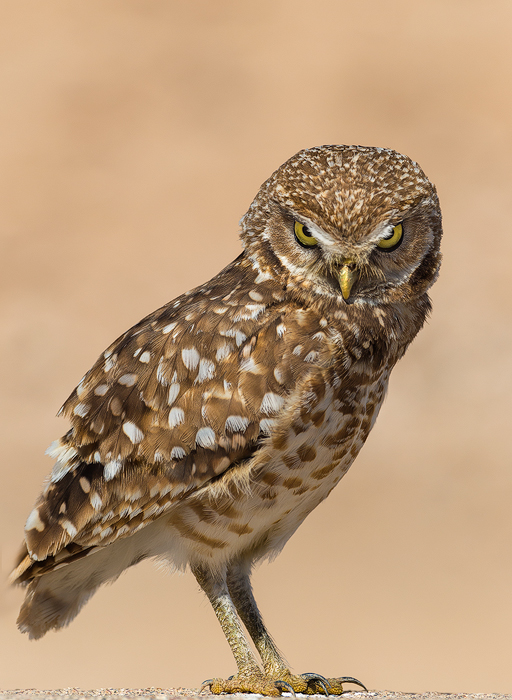
Disturbance | Burrowing Owl

Burrowing Owl - This image utilizes personality & behavior. Camera: Nikon D4s & Nikon 600mm Lens - Iso 200 | f-6.3 | 1/3200 sec. @ 600mm


This look of a Burrowing Owl in the image to the left is achieved by photographing it from just the right angle and produces the look of a stern school master (or perhaps your father when he’s angry at you). Capturing birds from the best angle and at the perfect moment can yield exceptional results that give your subject a personality all its own. Photos of birds and wildlife that show a recognizable personality immediately resonate with the viewer and tend to be very popular.


Images that illustrate friendship between two wild subjects (whether actual or perceived), always evoke positive responses. Places where birds and wildlife both find food sources together are great locations to look for this kind of interaction and capture these types of shots. I found this sea lion and cormorant sunning themselves together on a rock along the coastline of California.

Sea Lion & Cormorant - This image utilizes friendship & habitat. Camera: Nikon D4s & Nikon 600mm Lens - Iso 800 | f-8 | 1/320 sec. @ 600mm

Elk & Magpie - This image utilizes friendship & humor. Camera: Nikon D700 & Nikon 600mm Lens - Iso 400 | f-4| 1/350 sec. @ 600mm

I can’t emphasize enough the importance of studying bird behavior in the field. That’s how I was able to be prepared for a shot like the one to the right of the elk and magpie. I watched this magpie that was hanging out with a herd of Elk, eating parasites out of their fur and foraging underneath their feet. I witnessed it fly up and land on this one elk’s back numerous times before I got the opportunity to capture this shot. Anticipating bird behavior is absolutely essential for capturing winning bird photographs. Also be sure to read up in your bird field guide. There have been numerous birds that seeing them for the first time I immediately knew what they were just from having looked at them in my bird field guides or having read about their behaviors so many times in the past.


The final image I’ll discuss is by far the most comical image I’ve ever captured. This photo below of a Sandhill Crane was taken before I’d really gone full time with my photography, but it is consistently one of my best selling photographs. This image is also one of the few images of mine that I’ve entered into a photography competition. However, when I did in 2012, it took home Honorable Mention from the National Wildlife Federation Nature Photography Competition. People love humorous images of birds and wildlife so I jump at the opportunity to capture a photograph like this. It’s also the only image from my bird portfolio that was taken in captivity. This photo was shot on an a family outing there with my children at the Sandhill Crane exhibit in the Phoenix Zoo. Since beginning to work as a professional photographer I no longer take photographs of captive subjects. All the photos that you’ll see on my website were taken in the wild.

Sandhill Crane - This image utilizes humor & personality. Camera: Nikon D700 & Nikon 70-200mm Lens w/ 2x Teleconverter - Iso 200 | f-5.6 | 1/640 sec. @ 400mm

In conclusion I’ll say that the absolute best way to produce award winning images is to get outdoors with your camera. The more you’re out in the wild looking for avian subjects and watching bird behavior, the greater your odds are of seeing and capturing an exceptional image. After all, even if you don’t get the image you’re chasing after, I can’t think of a better way to spend the day than being outside surrounded by your feathered friends. So boost your award winning potential, and grab your camera… the birds are calling.

Your thoughts and comments are always welcome.

Nathaniel

Nathaniel on location in the Himalayas photographing raptors. – India, 2015

Beyond The Waterfalls

Chronicles of Nature

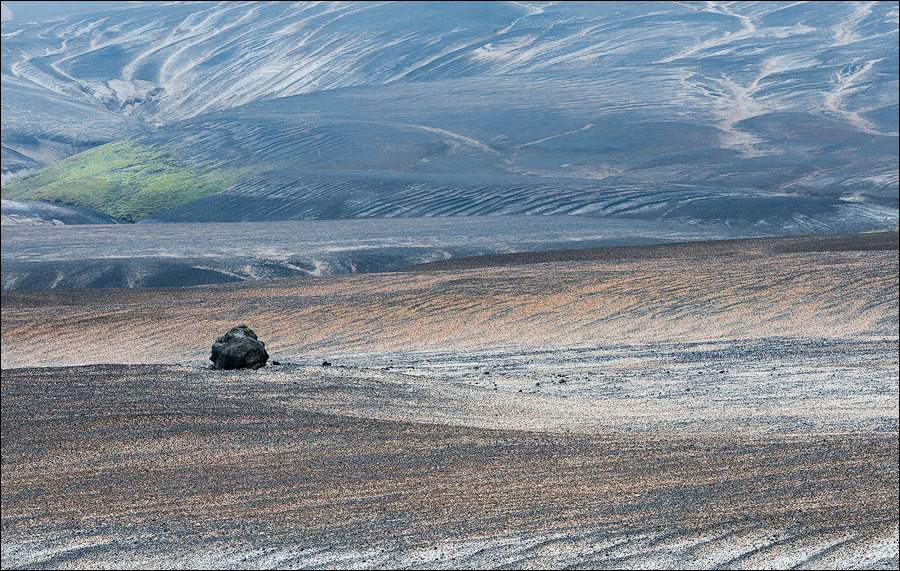
Independence | Iceland - A lone volcanic boulder rests in a windswept landscape of volcanic stone pebbles and patterns.

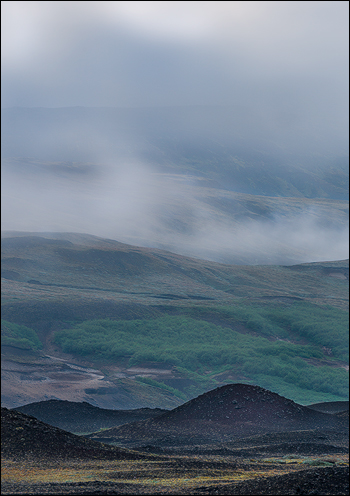
Hills In The Mist | Iceland


The Great Wide Open - Golden Plover Chick

You may have dreamed of traveling to Iceland, as I did for years, longing to photograph its incredibly diverse landscape. A plethora of images had tempted me for a decade or longer, enticing with massive waterfalls, glowing sunsets and noble Icelandic horses. Admittedly the allure of this magical country is hard to resist. As recently as a few years ago I had a powerful ambition to capture all the ‘iconic’ shots so often published of Iceland, but over time something in me changed. I’m not sure exactly what it was that altered my perspective, perhaps it was a number of factors. I noticed that my interest had shifted towards photographers that were creating more subtle, unique compositions and capturing the hidden elements of a scene, as opposed to the more obvious, grand shots that have almost become common now. I also became weary of what I perceived to be a rabid pursuit of ‘epic’ light. I do not mean to imply that there is anything wrong with photographing ultra-dramatic light and conditions, we would be remiss as photographers if we did not. Unfortunately though, the message often conveyed is, “If there isn’t a flaming sky, stay home” or even worse, “If there isn’t a flaming sky, just paint one in later with Photoshop”. Despite the general popularity and initial impact of these ‘sensationalized’ images of nature, I felt there was something missing. That approach to landscape photography left me feeling jaded. It is to the point now when one posts a photograph depicting spectacular light that they run the risk of their audience automatically assuming that the saturation slider was pushed too far to the right, or some Photoshop processing trick was executed. The viewer usually doubts, even if only sub-consciously, that the conditions represented in the photo ever existed. Often in today’s culture of digital nature photography great liberties are taken when processing files, pushing them far beyond the realm of reality. We’ve labeled this ‘artistic expression’ and moved on. I became more certain with each passing day that there was something forgotten, something overlooked…

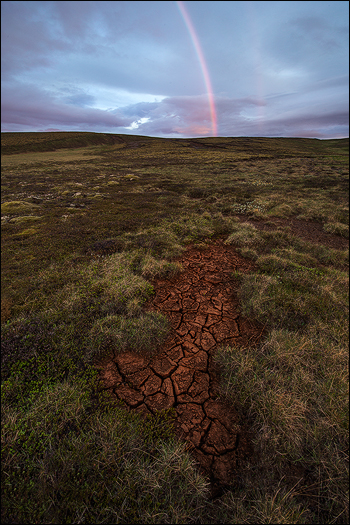
Waiting for our attention, beyond all the hype about towering waterfalls and blazing sunsets, there is a quite landscape.

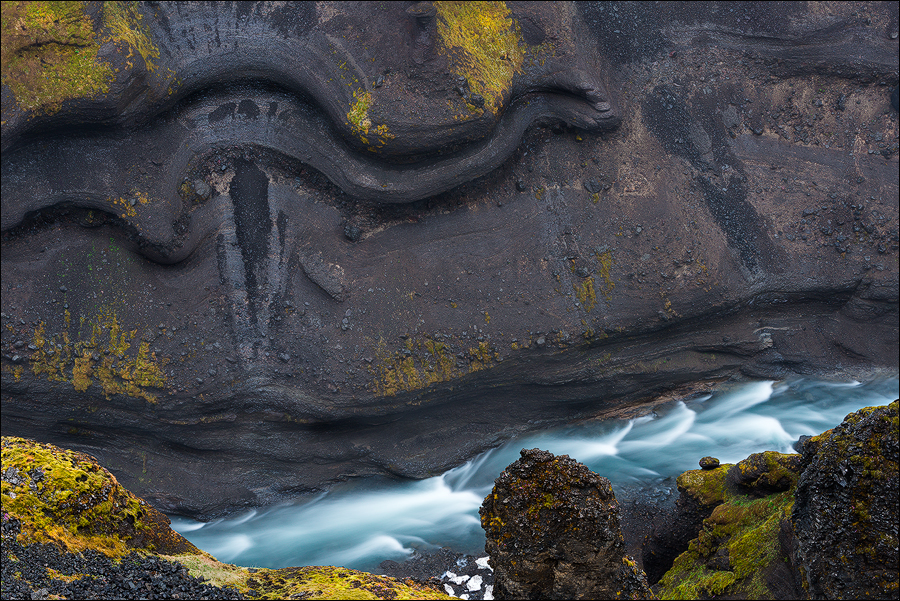
The River Serpent | Iceland - This image was made from a cliff high above Háifoss Waterfall. I sought something other than the ordinary, and found a serpent.

It was with these thoughts on my mind that I arrived in Iceland and began my quest to capture the beauty of this land from a fresh perspective. My first impression was that none of the photos I’d seen could do this amazing country justice. The photographic potential of the landscape in Iceland is staggering, at nearly every turn I found inspiration and elements that caught my eye, begging to be photographed. Since this was our summer photography tour we had nearly 24 hours of light each day making for nearly endless opportunities.

Halo Of The Earth | Thingvellir, Iceland - One of three different rainbows that we photographed on our tour.

One of the great benefits of this ‘midnight sun’ is that the ‘golden hour’ stretches into multiple hours and the window for soft light during sunrise and sunset has a much longer duration. Due to its proximity to the polar circle and location in the center of the vast Atlantic Ocean the weather changes frequently. Some days we would awaken to bright sunshine and a soft breeze and another day troubled, stormy skies with 60 mile per hour wind gusts. Regardless of the weather, the landscape is enchanting, and from a photographer’s perspective it is paradise. Glaciers, icebergs, volcanoes, lava fields, geysers, waterfalls, rivers, mountains, meadows, flowers, birds, horses, beaches and the mighty ocean, what’s not to love?

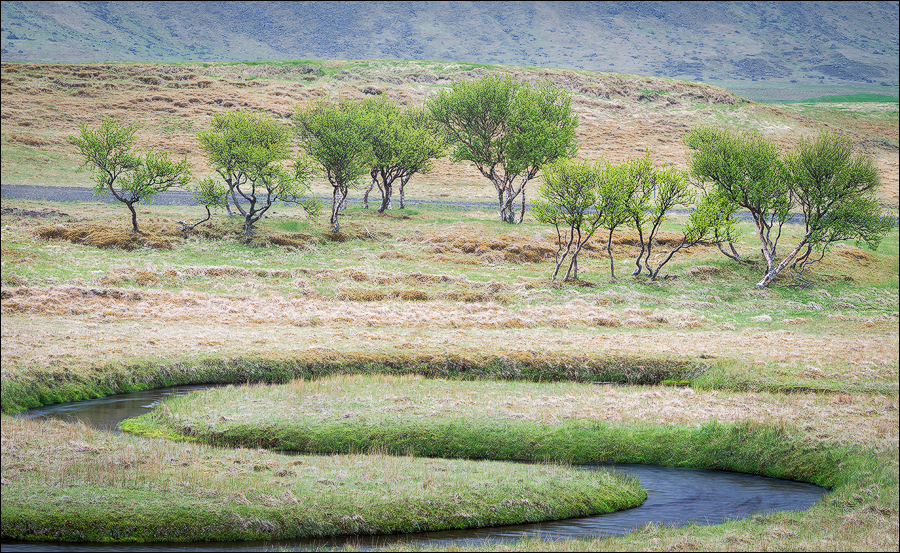
Bend in the Meadow | Iceland - A simple stand of small, weathered trees are complimented by the gentle curve of a quiet stream.

We visited many of the iconic locations throughout Iceland, but you might not know it looking through my Iceland portfolio. I wanted to shoot what resonated with me personally, not what garnered recognition or would get lots of attention on social media platforms. Much of the time this approach worked well, other times it meant visiting an iconic location and finding nothing that caught my eye but the obvious composition. When this occurred I’d set my gear aside and drink in the beauty surrounding me, capturing mental memories of the scene to enjoy forever.

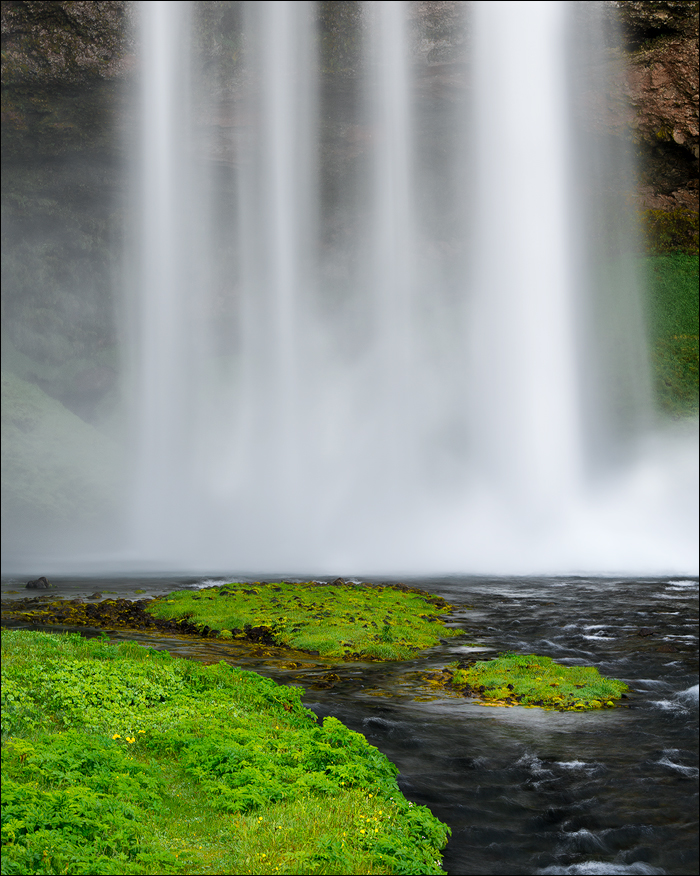
The Veil | Seljalandfoss, Iceland - The waterfalls that I did photograph I worked to find a fresh composition. This waterfall is repeatedly shot from the side looking back at the setting sun… Google ‘Seljalandfoss’ and you’ll see what I mean.

My one regret from our tour is that it did not last longer. Thankfully I’ll be back in 2016 to lead our Iceland Winter Photography Tours in January and February where we’ll experience Iceland decorated in winter’s embrace. I can’t wait to return and hope that a journey to Iceland is in your future as well, it’s truly an unforgettable experience.

There are stunning waterfalls everywhere in Iceland… be sure to look beyond them and find all the other beauty this land holds for those who seek it out.

Your thoughts and comments are always welcome.

Nathaniel

Feel free to email me directly for information on next year’s tours and please also check out: Iceland Photo Tours

Enjoy a hi-res gallery of the images from this article in my Iceland 2015 Portfolio .

A Gentle Awakening | Iceland - The incredible beauty of the sunrise over Iceland needs no enhancement, it is already perfect.

The Phantom of the Himalayas

Chronicles of Nature

“A shadow veiled by the mountain steep, or winter’s descending fleece of white.

Like its tracks the ghost cat vanishes, as a phantom fading into the night.”

~ from: THE PHANTOM

Few animals have captured our imagination like the snow leopard. This iconic cat’s habitat is known to be one of the harshest environments in the world. It ranges throughout the alpine areas of Central Asia and is rarely ever seen in the wild, much less photographed. This is due in part to its elusive nature and also because there are so few left in the world. In fact, most exceptional images of these animals are taken with camera traps in the wild, or more likely in captivity. As of 2014 the population of this endangered species was estimated between 3,500 and 7,000 individuals (*visit The Snow Leopard Trust for conservation info). In the snow leopard we find the untamable spirit of the raw wilderness and the grace of a large feline combined in a way that is duplicated nowhere elsewhere in the animal kingdom. I refer to them with great admiration as, The Phantom of the Himalayas.

When BigAnimals first contacted me and asked if I’d lead the 2015 Snow Leopard Expedition I eagerly accepted the job. Few things define adventure like pursuing an evasive, endangered cat through India’s Himalayan Mountain region for two weeks. I was very excited about the trip and went about making my preparations.

Part I: Arrival in India
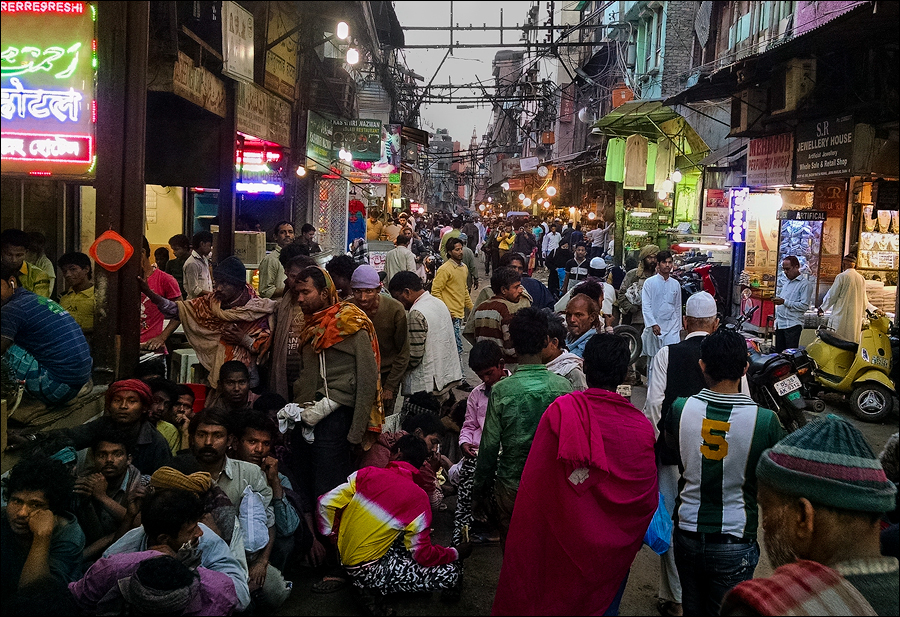
The streets of Old Delhi at dusk.

The streets of Old Delhi at dusk.

I departed from Arizona in the evening on February 18th and after traveling for over thirty-six hours I finally arrived in India on February 20th. As the plane began its descent into the New Delhi airport the sun was just beginning to peek over the horizon, casting beautiful patterns on the clouds. I was met there by my contact, Sanjay, and taken directly to the hotel. If you’ve never visited India, it is best described as a smorgasbord for the senses. The vibrant colors, intoxicating smells and varied sounds are overwhelming. India ranks second out of all countries in the world for population with nearly 1,268,000,000 people. There are over sixty different dialects, which effectively means that one could hear a new dialect spoken here every fifty kilometers. One of the most fascinating things for me coming from the United States, was the seemingly baffling traffic system. While I was pondering aloud what looked like organized chaos on the streets of Delhi, Sanjay said that to drive a car in India you need three things; a good horn, good breaks and good luck. I chuckled at this, but there was a lot of truth to his statement.
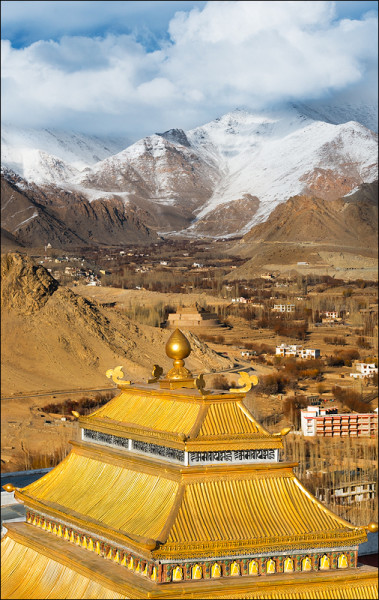
Clouds breaking up over the city of Leh, India

Clouds breaking up over the city of Leh, India

The day after my arrival I was joined by the rest of our group back at the airport for our morning departure to Leh, the capital of the ancient Himalayan kingdom of Ladakh. Located in the northern region of India at an elevation of nearly 12,000 feet (3,524 meters), Leh has a noticeable Tibetan influence and boasts a population of nearly 30,000. Due to its proximity to Kashmir, and the tensions between India and Pakistan over that region, the Indian military ban the use of any satellite radios as a matter of national security and will in fact confiscate them should you attempt to bring one with you. We were in Leh two days allowing our bodies to acclimate to the increased elevation and to watch for signs of altitude sickness. Precautions must be taken at this point with the group, even a mild case of altitude sickness can lead to symptoms like headache, dizziness and nausea, or in severe cases include double vision, convulsions or even deranged behavior. Thankfully everyone seemed to adapt to this new climate well. We spent these days taking in some of the local markets and visiting a number of the regions Buddhist monasteries that date back to the 15th and 16th centuries, including Hemis, Thiksay and Shey monasteries.
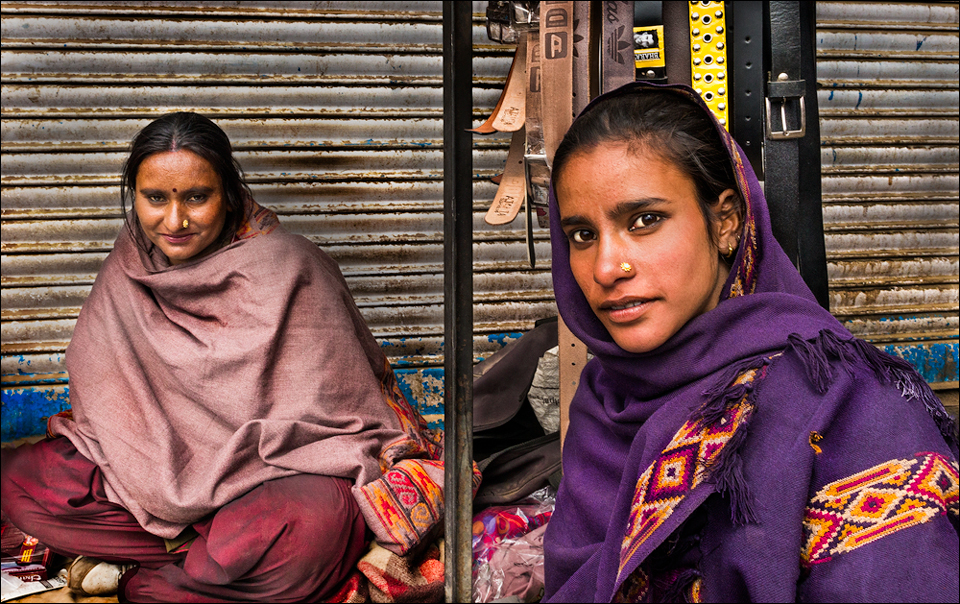
Girls In Market

Girls selling items in the market of Leh, India.
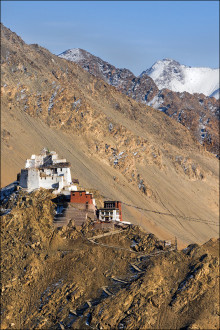
 

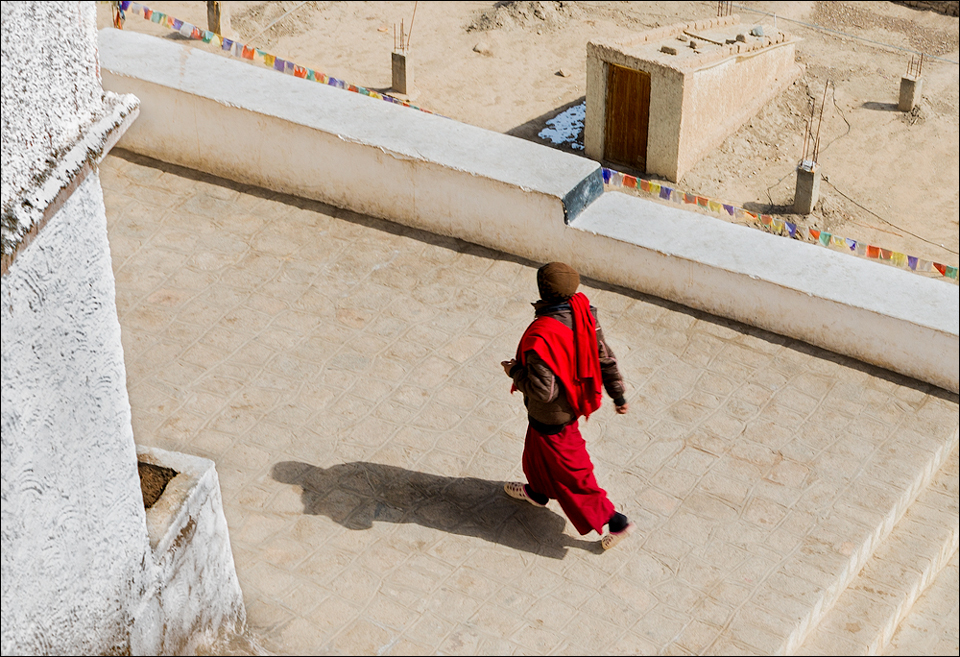
A hilltop monastery high above the city of Leh.
A hilltop monastery high above the city of Leh.

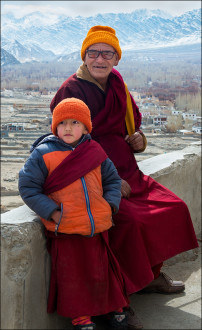
An orphan, Buddhist monk and his elderly caretaker.
An orphan, Buddhist monk and his elderly caretaker.

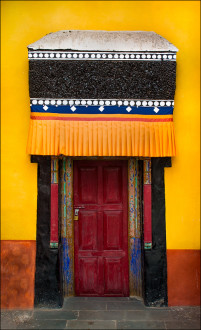
A colorful door at the 15th Century Thicksay Monastery.
Colorful door at the 15th Century Thicksay Monastery.

CallToPrayer_India_DSC3846

Call to prayer at a local Buddhist monastery.

While visiting the 15th century Thiksay Monastery our group was invited to share lunch with the Buddhist Monks. I took no pictures with them, choosing instead to live in that moment, sitting cross legged in the shadow of the Himalayas, eating rice and vegetables together. It was an experience I’ll never forget. A photograph is often the end of the story, but there are times it’s best to forget the camera and capture in your mind and soul what might otherwise be missed, and could never be documented in an image.
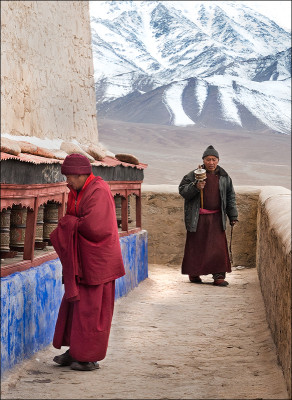
A Buddhist monk and a pilgram pause at the prayer wheels while making their ascent to the monastery.
A Buddhist monk and a pilgram pause at the prayer wheels while making their ascent to the monastery.

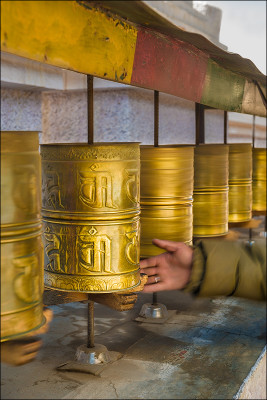
The hand of a Ladakh resident spins the long row of prayer wheels as he passes by.
The hand of a Ladakhi resident spins the long row of prayer wheels as he passes by.

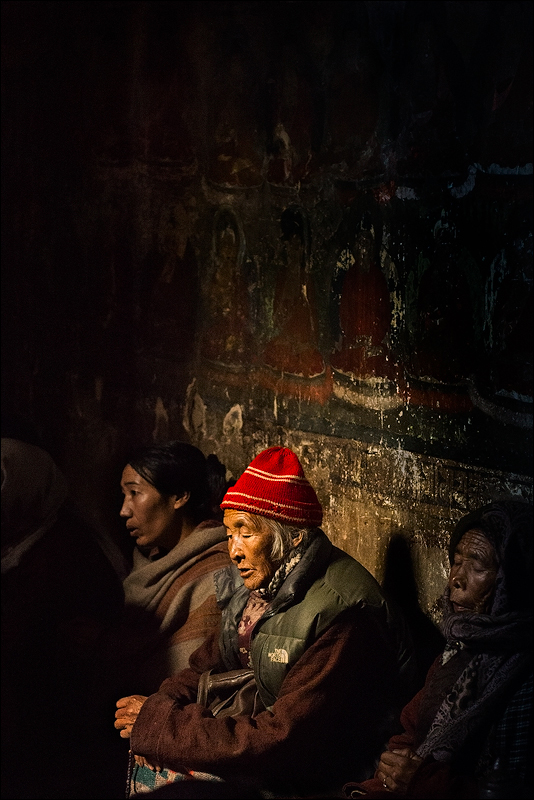
Buddhist women praying at a monastery located in Leh, India.

Buddhist women praying at an ancient monastery in the Ladakh region.

During our trip Gyalson (one of our guides) accompanied us to his home village of Matho to witness the annual Oracle Matho Nagrang Festival. This event is held on the 14th and 15th days of the first month of the Tibetan calendar at Matho Monastery. Matho Monastery is the only Sakyapa sect of Tibetan Buddhism in Ladakh. It sees fewer visitors than Hemis, Thiksay or Shey monasteries due to its location, however, it is renowned throughout the region for its Festival of the Oracles, which attracts thousands of visitors.

The 'Festival of the Oracles' at Matho Monastery.

Crowds line the balconies of Matho Monastery for the ‘Festival of the Oracles’.
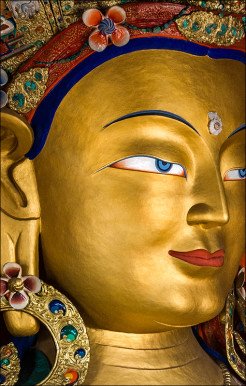
Detail from a giant statue of Buddha.

Detail from a giant statue of Buddha.

During this festival the oracles are said to inhabit the bodies of two monks for a few hours. The purpose of these oracles is to attempt to predict the fortunes of the local village communities for the coming year. Tables of food, tea, and hand crafts can be found as you make the climb up the hill to the monastery courtyard where the celebration occurs. A strong police presence can be seen which helps to maintain order of the large crowds that have gathered. Matho Monastery is also home to a large collection of ancient, Buddhist artifacts dating back as far as the 14th century. These items are displayed behind large, glass cases in guarded, upper rooms. Here above the monastery courtyard Gyalson secured fantastic seats for our group in front of the open windows so that we would have a birds eye view of the festival, and more importantly, so that we were not at risk of being squished by the throng of people below us. Photographs of the oracles were strictly forbidden during the ceremony, however pictures of the other portions of the event were allowed. We stayed for a few hours enjoying the spectacle, but elected to depart before the conclusion of the festival. Soon the one lane road that led back from Matho to Leh would be a chaotic mess from the traffic leaving this this small village. Thankfully we beat the rush and returned to our hotel for the evening.
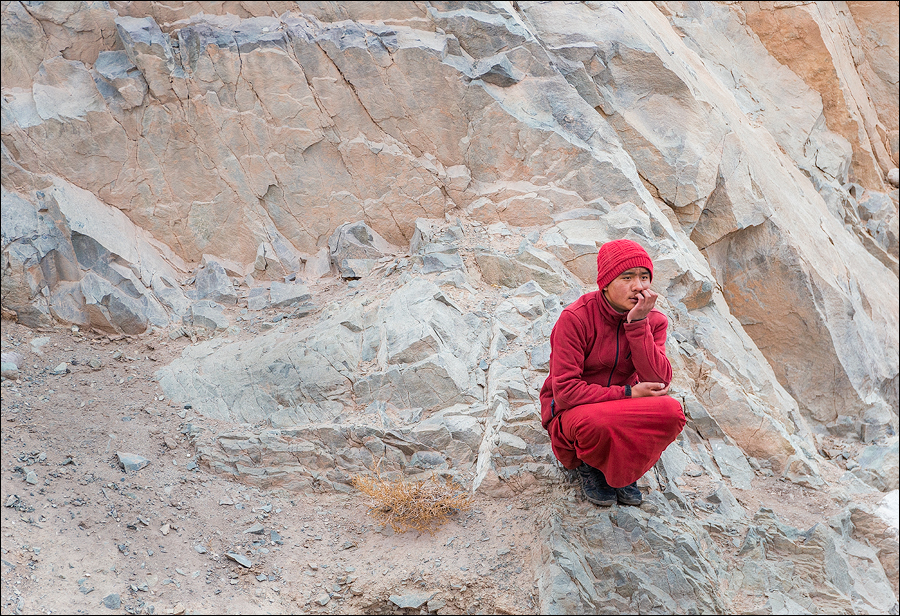
A solitary monk lost in thought on the side of the mountain above Matho Monastery.
A solitary monk, lost in thought on the side of the mountain above Matho Monastery.

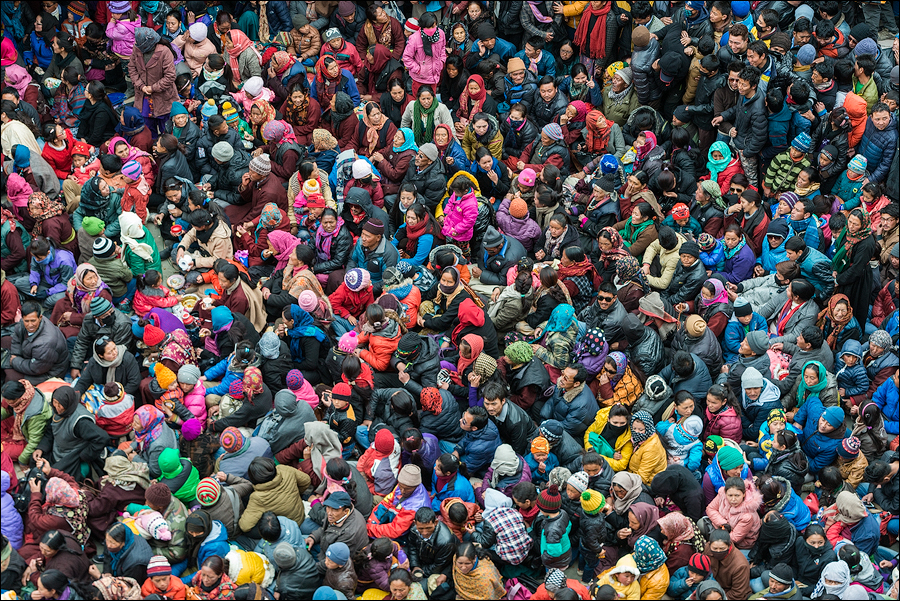
Thousands of people pack into Matho Monastery for the Festival of the oracles.
Thousands of people pack into Matho Monastery for the Festival of the oracles.

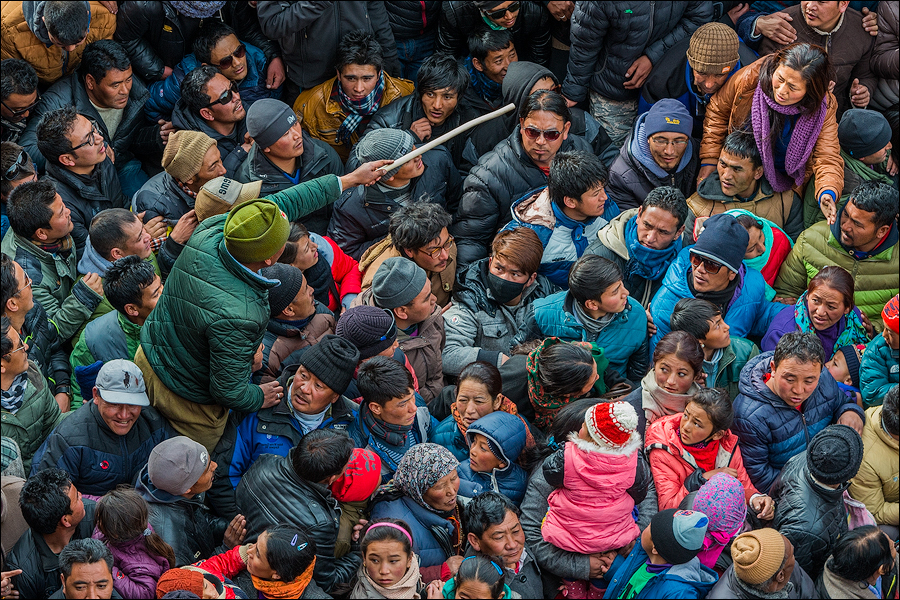
The police were drastically outnumbered, yet made a valiant effort to keep the crowd under control.
The police were drastically outnumbered, yet made a valiant effort to keep the crowd under control.

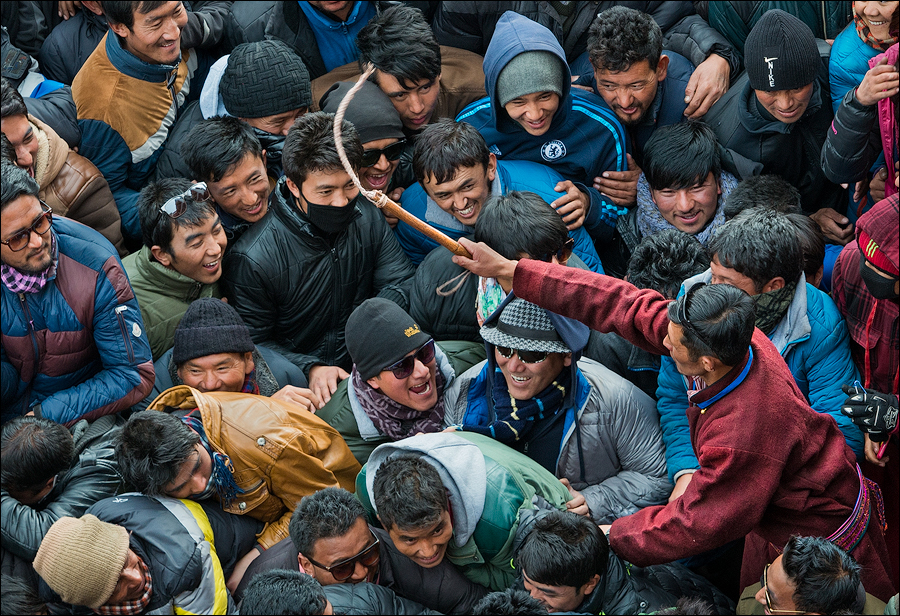
Some of the staff at the monastery attempted to enforce the law as well, but weren't taken very seriously.

Some of the staff at the monastery attempted to enforce the law as well, but weren’t taken very seriously by the masses.
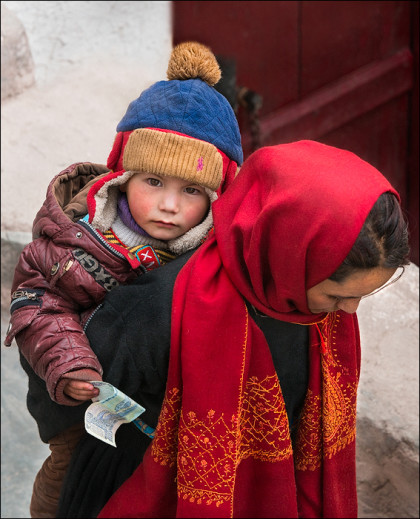
A young boy with a donation in hand is carried on his mother's back up to the monastery.

A baby boy with his donation is carried on his mother’s back up to the monastery.
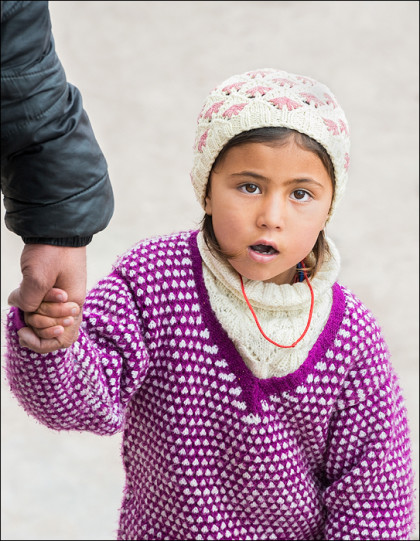
A young girl holds on to her father's hand tightly as they navigate the crowds.

A young girl holds fast to her father’s hand at the festival.
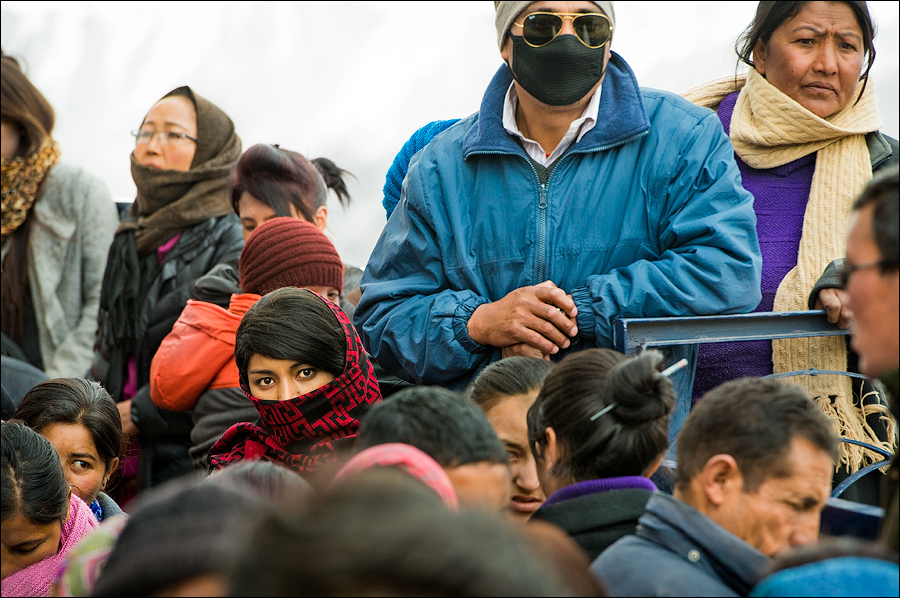
The welcome challenge of finding unique compositions in a sea of people.

I enjoyed the challenge of finding unique compositions in a vast, sea of people.
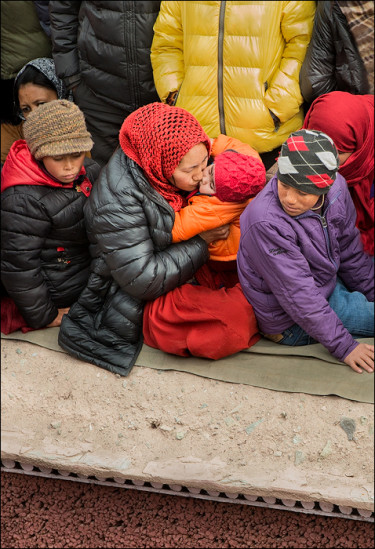
Young and old alike attended the event.

A mother tenderly kisses her infant while overlooking the courtyard. Young and old alike attended the event.
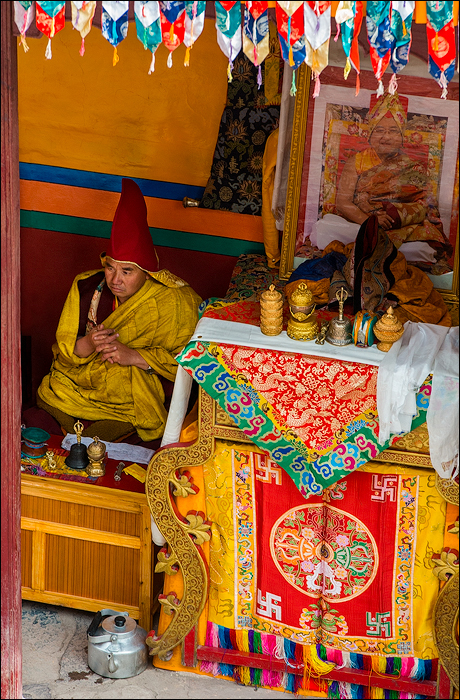
The monastery's superior monk awaiting for the festivities to commence.

The monastery’s superior monk awaiting the festivities.
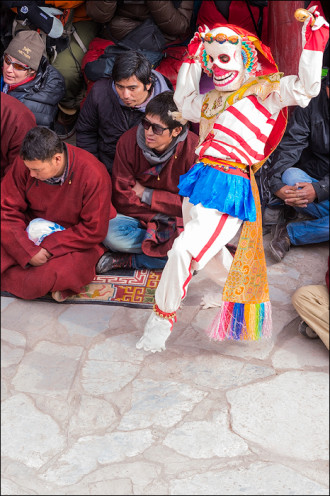
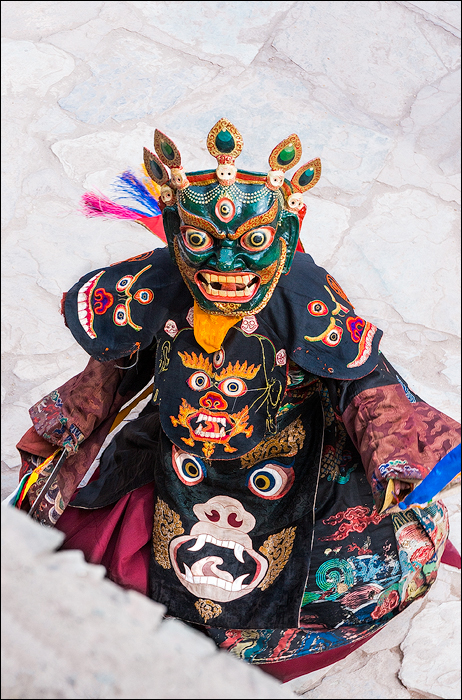
Masked dancers performing.
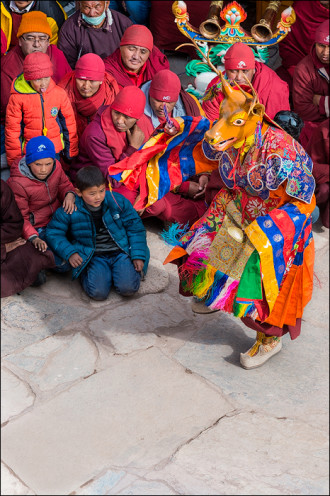
Masked dancers performing.

Entertaing the children.

Entertaining the children.

Dance of the Dragon

Dance of the Dragon

Part II: Into the Wild
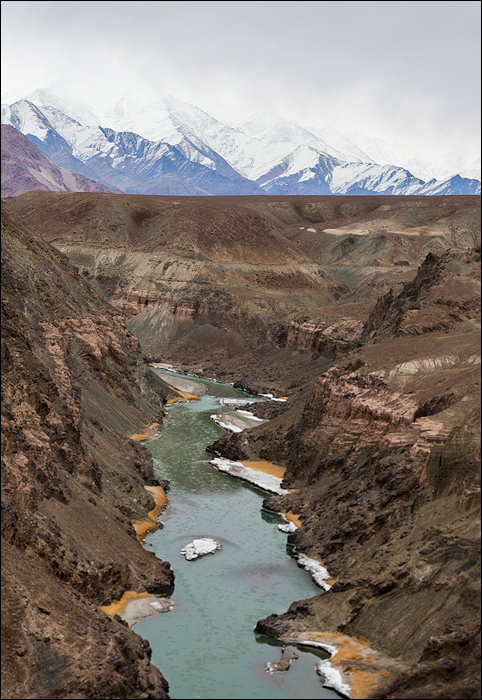
Crossing above the Indus River on our way into Hemis National Park.

Crossing above the Indus River on our way into Hemis National Park.

On the morning of February 23rd we departed Leh by car for the tiny village of Zingchen located on the perimeter of our destination, Hemis National Park. Only two families call Zingchen home. Thus began our odyssey in search of the snow leopards. Arriving in Zingchen we set out trekking on foot with our expert local guides, Gyalson Shangku and Tsering Gurmet, making our way up into the Himalayas. Each member of the group was assigned an assistant that would help carry their camera gear anytime needed. My helper’s name was Stanzin, he and the other assistants worked tirelessly for the duration of our expedition. Our travels would now take us anywhere from 12,000 to 15,000 feet in elevation (3,658 to 4,572 meters). For me this is where I experienced one of the most refreshing aspects of the trip as we officially left the ‘grid’. There was no longer a cell signal or an internet connection anywhere. It changed the tone of our trip from one of international travel, to a wilderness adventure. Large, loose stones covered the surface of the trail most of the way. Admittedly I’m no road construction expert, but the road (as it was called), that led from the tiny village of Zingchen to Rumbak, was a highway engineer’s worst nightmare. Large boulders as big as a mid-sized car were perched precariously at various points along the route, looking like they might tumble down at any moment. Over time patches of loose shale collapsed into the road below making obstacles in our path. Nearly a mile past where the pavement ended and the rough terrain began, a long abandoned motorized scooter sat decaying off to one side of the trail.Eventually we reached the base camp site where different expedition groups pitched their tents, and from there moved on to Rumbak Village.
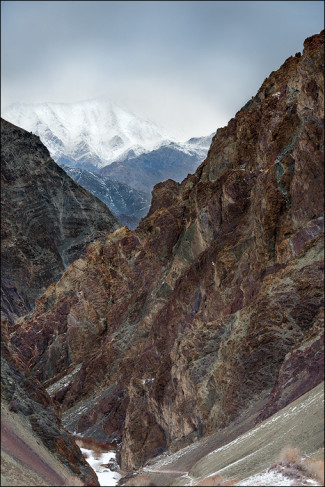
Clouds from an approaching storm begin to engulf the mountain peaks.

Clouds from an approaching storm begin to engulf the mountain peaks near Rumbak Valley.

As you trek through the overwhelming presence of this raw wilderness one quickly becomes aware of the frailty of our human existence. Without all our ‘expedition gear’ we are in fact incredibly weak when compared to the intelligence of the snow leopard on the ridge line, the agility of the blue sheep on the mountain cliffs or the strength of the golden eagle soaring in the sky. In this extreme climate we would assuredly falter without the assistance of our modern ‘advancements’. This realization brings with it an even more profound respect for the relatively few species of wildlife that call this land their home.
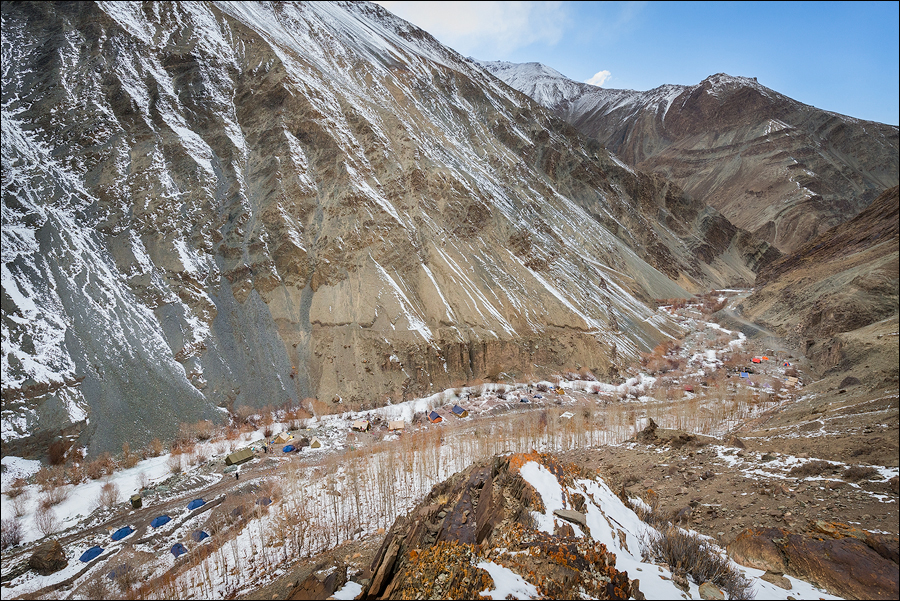
The base camp area in Husing Valley as seen from the observation platform.
The base camp area in Husing Valley as seen from the observation platform.

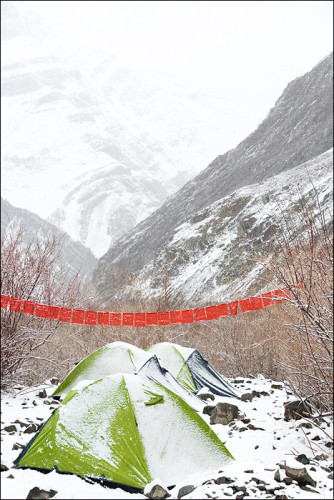
Tents in the snow under a string of Buddhist prayer flags.
Tents in the snow under a string of Buddhist prayer flags.

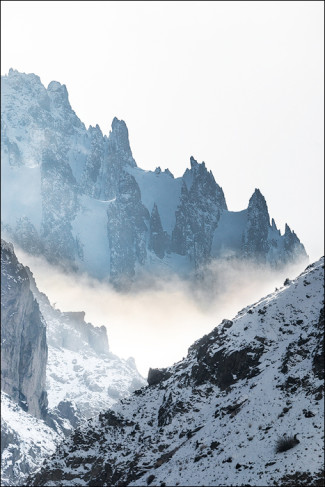
One of the most impressive rock formations i saw during the expedition.

One of the most impressive rock formations in Hemis N.P.

In Rumbak we were given accommodations at a home stay by a kind, elderly man named Younton. The local people in Rumbak Village take turns providing accommodations and food to the tourists, receiving payment for their hospitality to help supplement their limited income in this remote region. There’s no running water in Rumbak. After sundown the entire village is powered from a single generator which one of the local villagers starts each day at dusk. Following a traditional Ladakhi meal sleep came easily to our group, exhausted from the day’s long hike.
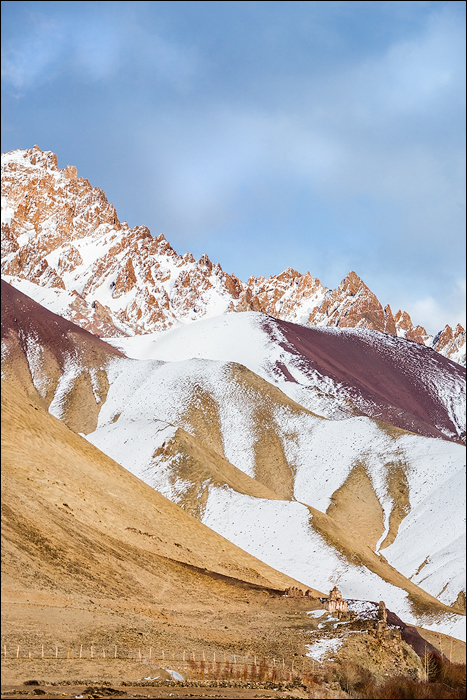
Himalayan Daydreams.
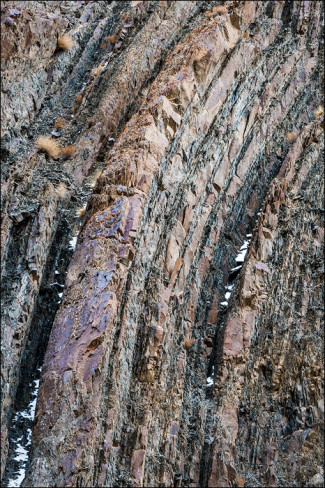
Himalayan Daydreams.

Stone Carving

Stone Carving

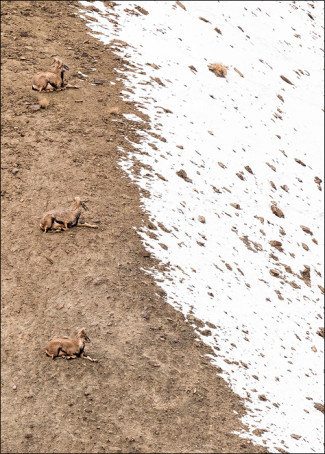
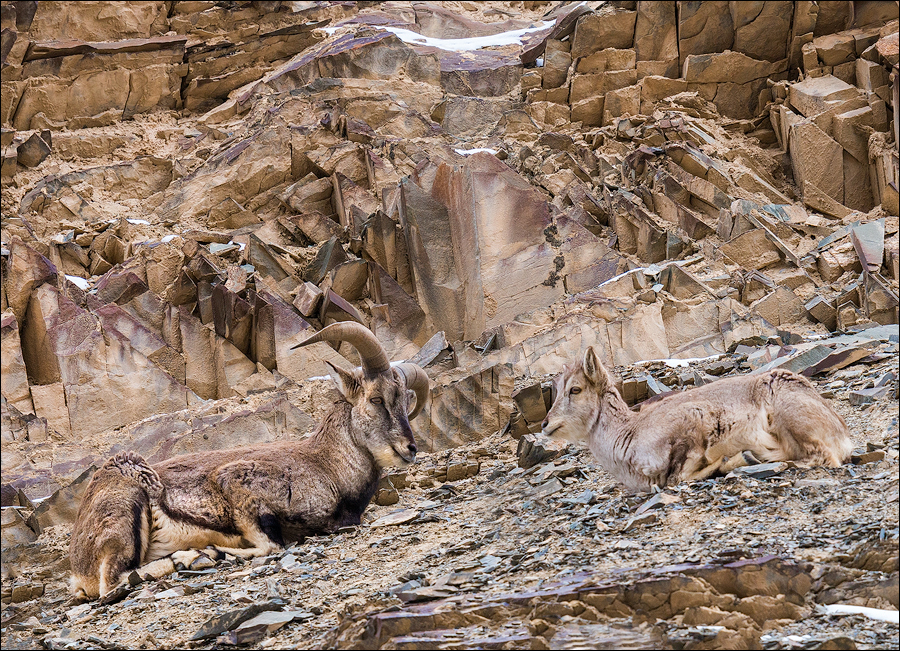
Blue Sheep resting on a symmetrical mountain side.

A trio of Blue Sheep rams resting on a symmetrical mountain side in Rumbak Valley.
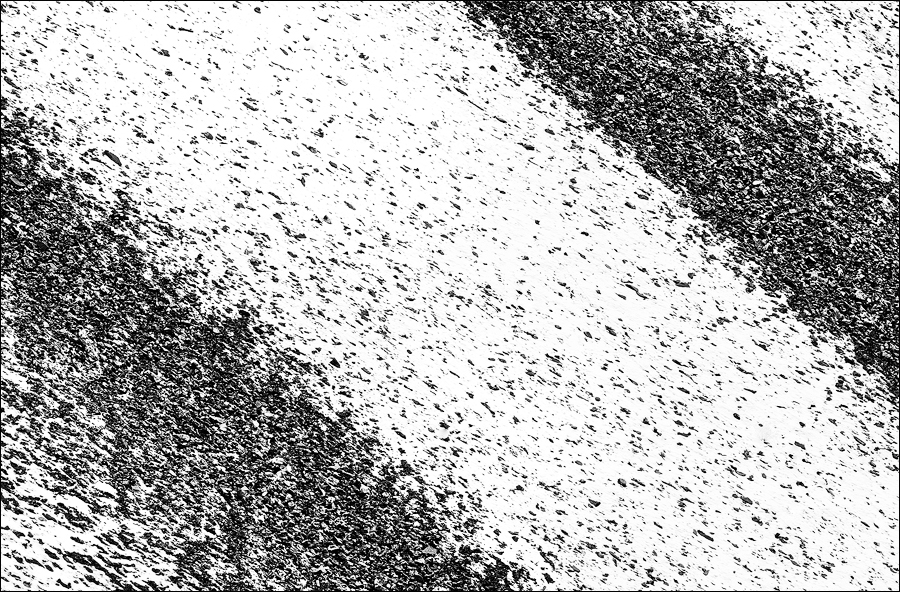
Snow and rock slides on the mountain slopes creating beautiful patterns.

Snow and rock slides on the mountain slopes creating beautiful patterns.

Part III: Call of the Ghost Cat

Perhaps due to the change in climate or the drastic jet lag (I’m honestly not sure), at this point I’d begun to lose track of what day of the month it was. According to the calendar it was February 24th, but the days had all started to blend into one. We awakened while it was still dark and got in position long before sunrise, scanning the mountain slope for any sign of the big cats.

A lone Chukar Partridge makes its way across the shale covered ground.

A lone Chukar Partridge makes its way across the shale covered ground.

In the mornings we searched for the leopards on the ridge line, returning to their place of rest for the day after a long night of hunting. The frigid air on your face drives away any lingering hint of drowsiness and the adrenaline of our search made me feel alive in a way that I’ve not often experienced. A large flock of chukar partridge fly by us, but remain invisible in the pre-dawn light. The rush of air whistling through their wings is reminiscent to the sound of an F-16 Fighter Jet passing overhead at a very low altitude. Oddly the towering, majestic mountain peaks here are not named, but rather the valleys in each region. This area is appropriately named Rumbak Valley, due to its proximity the village by the same name. We search the surrounding mountain slopes all morning without any evidence of a snow leopard, but are pleased to find a flock of almost two dozen blue sheep. As the leopard’s primary source of food in this area, locating blue sheep in the valley is a good omen.
A Blue Sheep Ram teaching a yearling the virtues of camouflage.

A Blue Sheep Ram teaching a yearling the virtues of camouflage.

About mid-day we gathered our belongings and make the trek from Rumbak back to our base camp on the banks of a frozen stream in Husing Valley. As our group arrives back to base camp the afternoon shadows stretched out, lengthening as the sun began its decent and dipped behind the western peaks. After settling into the campsite we make the 200 meter climb up one of the mountain sides, to a level place above camp known as the observation platform. There we set up our scopes and long lenses, watching for any sign of movement on the mountain tops. Snow leopards tend to live alone and regularly patrol their territory, which often covers hundreds of square miles. To communicate across such vast areas, these cats leave markings on the landscape by scraping the ground with their paws and spraying urine on the rocks. They’ll also rub up against these rocks leaving behind bits of hair. The snow leopard’s breeding season occurs during the coldest months of the year from December to March, making the timing of our trip perfect. This is the one time that a snow leopard will allow another to enter its range. We searched without success from the observation platform for some time. My eyes were drawn to a large group of boulders almost 400 meters above us at the summit above the observation platform.

On the observation platform searching for snow leopards.

On the observation platform searching for snow leopards.

For some unknown reason I felt a strong impulse to climb there. With the permission of the guides I set out making my way up the slope. My body was still acclimating to the elevation, so I found myself stopping often in the thin air to catch my breath. The loose stones beneath my feet made progress incredibly difficult, and portions of the climb felt almost vertical. Few things can prepare one for the majestic sight that’s found at the top of a mountain in the Himalayas.
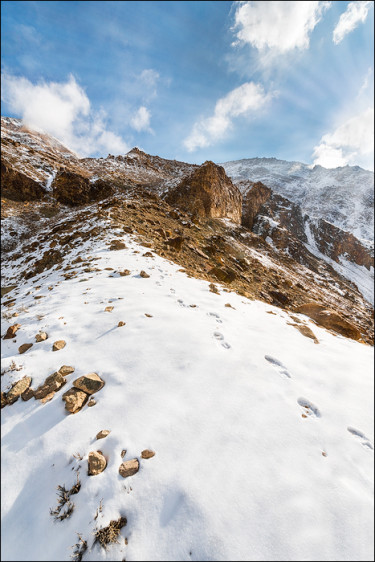
This photo was taken from the observation platform looking up toward the peak I climbed to. You can see the location in the top/center of the image.

This photo was taken from the observation platform looking up toward the peak that I climbed to. You can see the small peak at the back of this image in the top/left third of the frame.

Arriving at the peak I stared in awe at the untamed, rugged beauty surrounding me in every direction. Though the light was poor, I took a couple images to remember it by and rested there until darkness began to fall. I stood up to make my way back down the mountain and froze, rooted in my tracks from the sound that fell upon my ears. From across the Husing Valley was the clear, unmistakable cry of a snow leopard! In that moment I discovered the answer to why I’d made the arduous climb to this place. In delirious excitement I radioed down to the group to tell them what I’d heard. Initially I believe my report may have been met with some skepticism. However, once I made my way back down to the observation platform and imitated the sound I’d heard, the guides agreed it was indeed the call of a snow leopard. They’d been listening attentively all winter for the male and female snow leopards to begin calling to one another, but silence had reigned over this alpine region up until that moment. The snow leopard is the only big cat that cannot roar. During the mating season a pair will call back and forth to each other. Their cries are best described as a very loud snarl more than anything else. We climbed back down to camp excitedly discussing the close proximity of the snow leopard and the potential of soon capturing a glimpse of one.
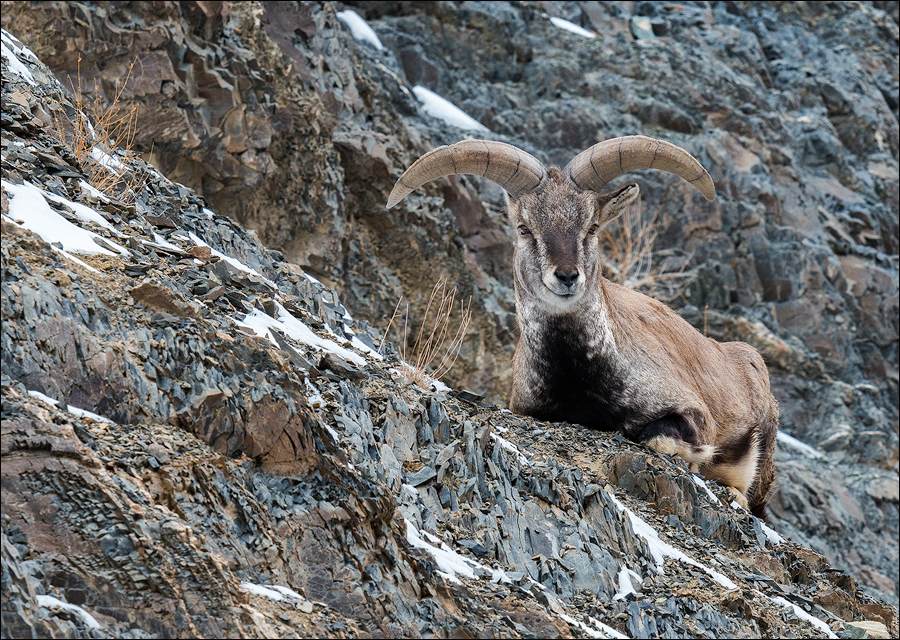
One of the dominant rams that we encountered during our trip.

One of the dominant Blue Sheep rams that we encountered during our trip.

Part VI: Through the Shadows
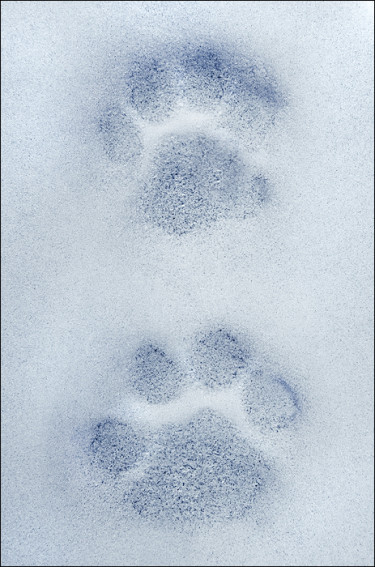
Snow Leopard paw prints.

Snow Leopard paw prints.

It was windy overnight, our group awoke on the 25th of February to find snow falling lightly at dawn. We set out early and as we hiked up to the observation platform were delighted to find snow leopard paw prints just outside of camp along the trail. We had just reached our destination when a call came over the radio saying that a snow leopard had been spotted from the road below the camp in Tarbung Valley. With those words everyone set off at a rapid pace carrying long range lenses and tripods, hoping to catch sight of the elusive cat. The wind pushed snowflakes against my face like tiny darts. Their sting was muted by the stunning scenery surrounding me, and the anticipation of seeing a snow leopard in the wild for the first time. We climbed a few miles up into the mountains above Tarbung Valley without finding a trace of the leopard. The sun, hidden behind snow clouds for most of the morning, suddenly broke through and illuminated the rocky mountain side. Rather than feel dejected after the long hike, our group took advantage of the scenery and captured some beautiful light shining on the cliffs above. Lobzung (our cook) followed us up the mountain and served breakfast there, soon afterwards we returned to camp.
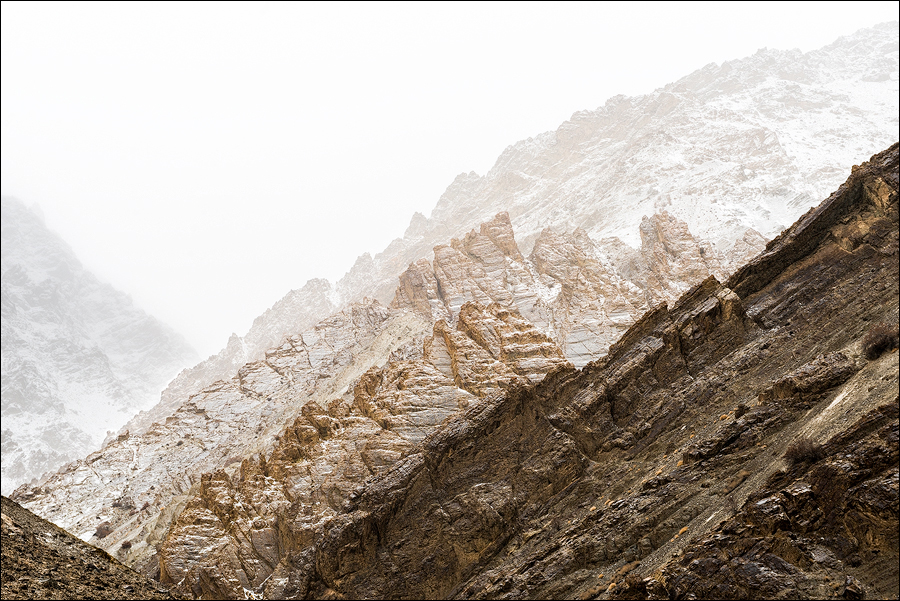
The clouds parted for a brief time during a snow storm revealing gold on the mountain.

The clouds parted for a brief time during a snow storm revealing a golden mountain.
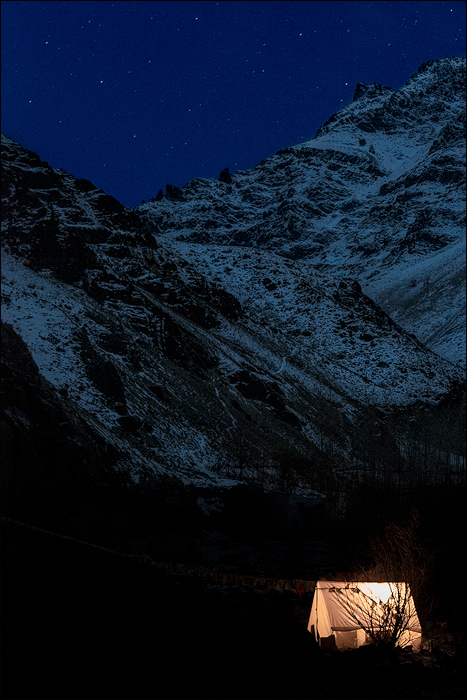
A view of our camp site by night in the shadow of the Himalayas.

A view of our camp site by night in the shadow of the Himalayas.

Towards the end of the day we heard the snow leopard call five consecutive times from our campsite, further confirming the cry that I heard the previous day above the observation platform. That evening as darkness settled over the camp, a soft snow began to fall from the heavens. With no wind to push the storm away from us the snow rapidly began to accumulate on the ground. Our group was resting before the evening meal and I was outside capturing a photograph of our campsite. Not long after nightfall, Gyalson and Gurmet were walking just beyond our campsite discussing the day’s events. At one point Gurmet turned and glanced over his shoulder at the cliff above the road. In utter disbelief he stared into the darkness at what was unmistakably an adult snow leopard walking on the cliff directly above our camp site, a mere 80 meters away! He came running over to me whispering excitedly “Nathaniel, hurry with your camera! Come quick, we’ve seen a snow leopard very close!” My initial reaction was to run to join the group already there attempting to capture a photograph in the semi-darkness, but something in the back of my mind told me that I wasn’t going to capture an image of the leopard this time. I finished taking my photograph of our campsite and proceeded to switch the ball head on my tripod to a gimbal head to accommodate my super-telephoto lens. I don’t know if it was the cold, the age of my tripod or perhaps a combination of factors, but when I went to switch heads the threaded center post spun freely down into the tripod base. I tried unsuccessfully in the dark three times, but I wasn’t able to attach my gimbal head. I stared in disbelief at my plight, the snow leopard now a mere 60 meters away.
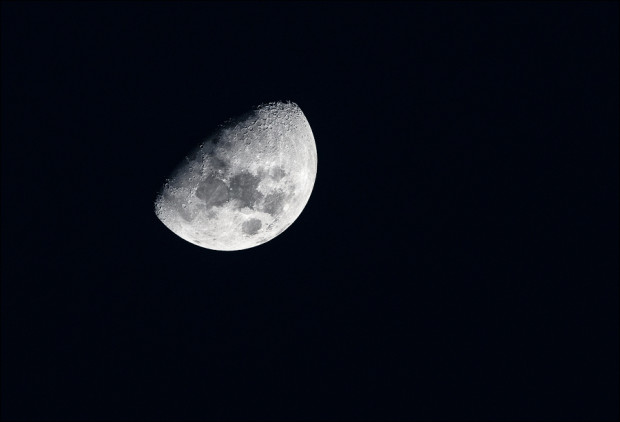
The dark side of the moon.

The dark side of the moon.

As a general rule the wildlife officials don’t allow the photographers to get closer than 300 meters to the snow leopards. Seeing one at a distance this close was almost unheard of. All around me camera shutters were firing off in rapid succession seeming to only further mock my situation. At first the snow leopard just sat silently watching us and then like a true ghost cat it slowly walked away, fading into the darkness. I congratulated all the photographers who had managed to capture images of the leopard and admired their photos. An exceptional opportunity had eluded me due to the failure of my equipment. However, something told me that it wouldn’t be our last encounter with this leopard. That night I met with Gyalson and Gurmet and told them that I wanted our entire group to get up while it was still dark to search for paw prints before the rest of the groups awoke and trampled on whatever tracks might have been left by the leopard overnight.
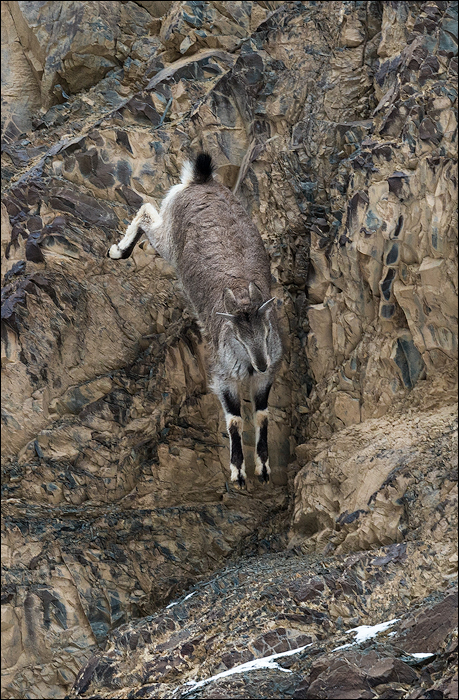
A yearling Blue Sheep jumps fearlessly from the edge of the cliff to the rocks below.

A yearling Blue Sheep jumps fearlessly from the edge of the cliff to the rocks below.

Part V: The Phantom Revealed

I didn’t need an alarm the morning of February 26th. I was out of my tent with all my gear long before dawn. The snow ceased and skies had cleared overnight. The moon aided us, its light reflecting off of the snow. We set out from camp towards Husing Valley in search of tracks, looking where we’d seen them the previous day, but there was no evidence of the big cat there. Scanning the side of the mountain we saw what looked to be a pair of eyes reflecting back at us. I tried to tell myself that it was only a blue sheep, however the eyes looked too close together and faced forward… much like a snow leopards. Once it moved there was no mistake, we’d located our phantom! Leaving a cleft in the rocks where it had most likely waited out the evening storm, the leopard walked gracefully along the face of the mountain. Soon it disappeared from view between a gap in the rocks and we lost track of it. Part of our group went with our Gyalson up the face of the mountain we were on, while I elected to climb with Gurmet and Stanzin up to the observation platform to search that area. Arriving we set up a scope and my 600mm lens and began scanning the mountains. We found nothing for the first few moments, then suddenly Gurmet exclaimed, “Nathaniel! There’s the snow leopard!” Where?! I asked excitedly. Looking in the direction Gurmet was pointing I saw the snow leopard near the summit. The big cat was climbing directly towards the rocks above the observation platform where I’d made my solitary hike a little more than a day before! The distance was nearly 400 meters and it was still mostly dark, so I pushed my ISO to 6400 and quickly took a couple shots. I stared in dumbfounded silence as the snow leopard walked and sat down directly below the large rock that I’d rested on at the top of the mountain.
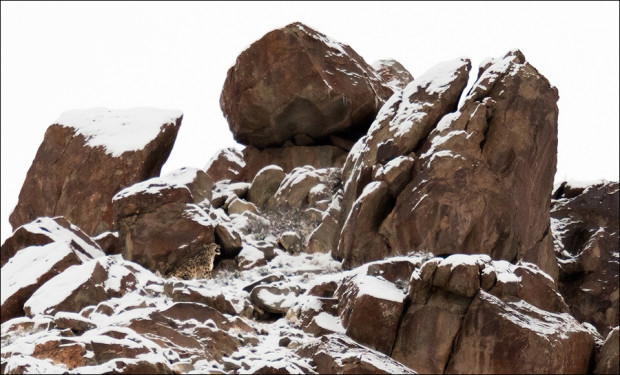
Snow Leopard near the summit of mountain in Hemis National Park, India.

Snow Leopard near the summit of mountain in Hemis National Park, India.

I managed to capture another couple images before it disappeared from view over the crest of the summit. I was the only photographer on the platform, and though my images were far from exceptional, I was the happiest man alive. There were plenty of hi-fives and fist bumps there on the mountain that morning. I marveled at the fact that I’d stood on the exact same ground as this snow leopard a mere day before.
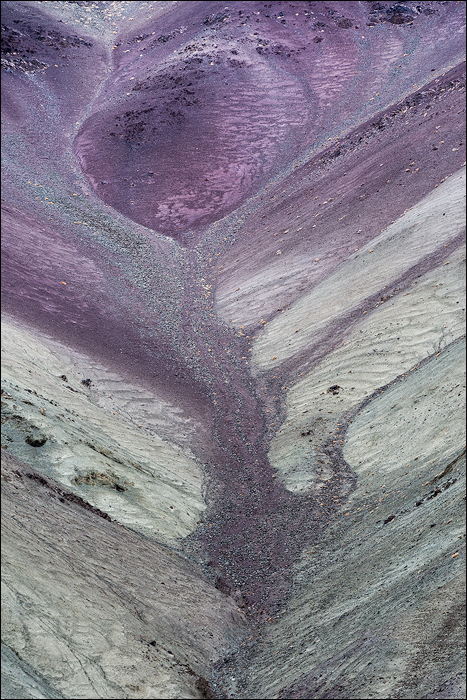
The heart of the mountains.

The heart of the mountains.

In many ways the beginning of the expedition played out as though it were scripted, we were just here acting out our roles in this unbelievable story. Many travelers come from every corner of the world to the Himalayas in search of snow leopards, spending days or even weeks here, but leave without even catching so much as a glimpse of one. I was humbled and incredibly thankful for the success we’d experienced in such a short time.

We saw the snow leopard again on February 27th, the third consecutive day in a row. This sighting was atop a ridge line at a distance well over 500 meters. While the rest of our group was resting I had elected to walk up the surface of the frozen stream with Stanzin in search of some unique images. We slowly made our way, eventually nearing an area called Pika Point, (named by the locals after the community of pikas living under the rocks there). While setting up my camera for a landscape composition I heard excited conversation nearby from someone’s two-way radio. Due to the conversation being in Ladakhi I turned to Stanzin and asked him what they were saying. After listening for a moment his face lit up and he said that someone had found a snow leopard just up the trail from where I was shooting. I could have easily walked to the location and been set up to photograph the leopard within minutes, but as the photographer leading the expedition I felt it my responsibility to ensure that our group knew about the sighting. As you can imagine it was incredibly difficult to maneuver back downstream on the ice at a rapid pace without falling. We finally reached the campsite and I roused our group.
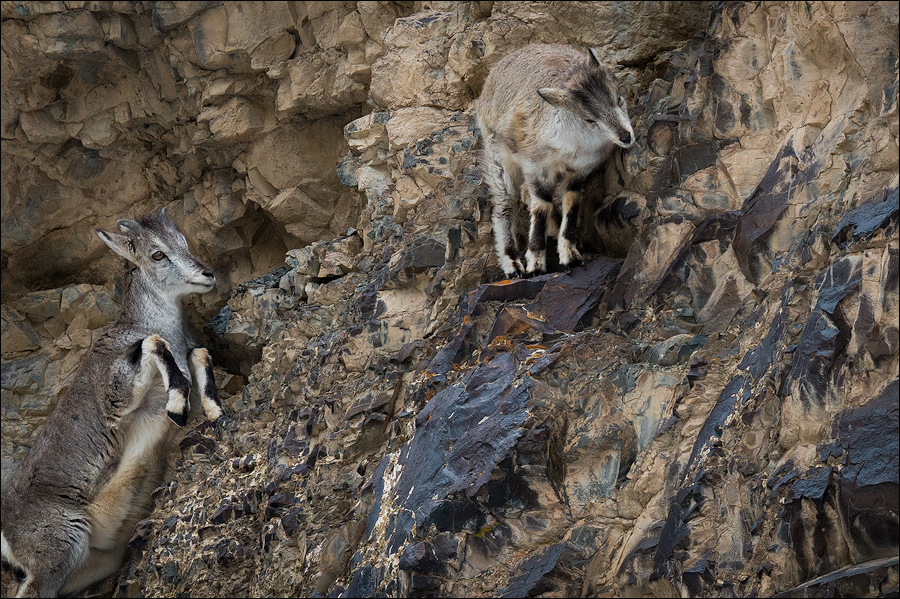
A young Blue Sheep in need of some assistance.

A young Blue Sheep in need of some assistance.

Everyone quickly took off up the trail and arriving at the location set about photographing the cat on the ridge line. I was pretty winded after racing back to alert the others. As a result I ended up being one of the last to make it up the road to where the snow leopard was visible.

One of the many pika in 'Pika Point' up the trail from base camp.

One of the many pika in ‘Pika Point’ up the trail from base camp.

Just as I drew close to the group the leopard stood up and started leaping downhill from one boulder to another and disappeared. I was disappointed to have missed another opportunity, but comforted recalling the incredible experience I’d had with this leopard the day before. We would hear the snow leopard call one more time during the remainder of our stay in Hemis National Park, but never saw it again after that day. It occurred to me that the snow leopard is only seen when it wants to be. Our clumsy movements are no match for their exceptionally keen senses. During each encounter these incredible animals seemed well aware of our presence long before we ever located them, and they disappeared without a trace whenever they chose to.
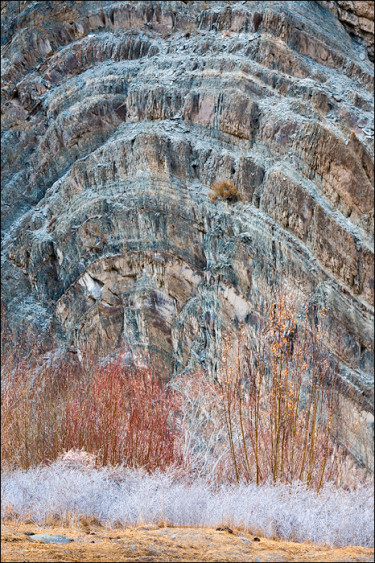
Layers of beautiful patterns and textures on the mountain.

Layers of beautiful patterns and textures on the mountain.

Part VI: Saying Goodbye

The remainder of our expedition was spent photographing blue sheep, pikas, bearded vultures golden eagles and even some urial sheep. The sky was dominated by shades of solid gray during much of our stay, making landscape photos a challenge. Of the time I was in India I believe we saw blue sky on only three different days. Due to the sky being shrouded in clouds we didn’t experience much in the way of nice light for sunrise or sunset. We focused a lot on the more subtle patterns and textures of the mountains, as opposed to the grand landscape.

It's official, the' Candy Crush' craze is international!

It’s official, the’ Candy Crush’ craze is international!

On our final, full day in Hemis National Park I spent a lot of time with the expedition team. Sitting with them in the kitchen tent I thought to myself how remarkable it was that after just two short weeks with these wonderful people I’d already begun to understand elements of their conversations in the Ladakhi dialect, though I knew few of the words. Often I could sense inflection in their voices or read the expressions on their faces to learn what the conversation was about. Perhaps the best was when I detected humor in their speech and knew when to laugh with them. We shared many a good laugh together, but perhaps none as hearty as when we discovered that one of Lobzung’s favorite ways to pass time during the day was playing Candy Crush on his phone. After our final meal Lobzung prepared a surprise cake and presented it to our group, inscribed with icing were the words ‘Snow Leopard Trek – We Did It!’.
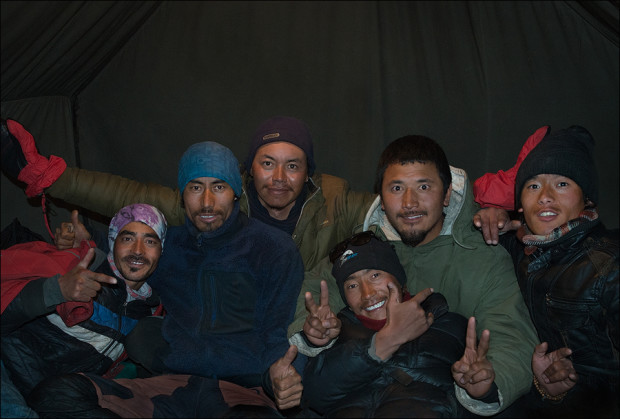
The Snow Leopard Expedition Team | Hemis National Park, India

The 2015 Snow Leopard Expedition Team - Hemis National Park, India
Snow-Leopard-Trek-Cake_India_IMG_20150304That afternoon Gurmet and I climbed a good distance up the mountain face beyond where the snow leopard had been seen walking on the cliff above our camp at night. Having explored the area we took in the view one last time before making our descent. Walking back along the edge of the stream I found an old blue sheep horn hidden among the rocks and bushes. With the permission of our guides I placed it carefully in my tent. This horn now sits prominently on the desk in my office, a gift from these majestic mountains and a reminder of this incredible journey. The following morning we departed from Hemis National Park. As I hiked out I recalled many of the experiences from our eventful snow leopard expedition. My heart was full of gratitude for the various memories that I would carry for a lifetime of this vast, alpine kingdom and the cat I call, The Phantom of the Himalayas.

Parting Shot | Snow Leopard Expedition 2015

Snow Leopard Expedition 2015 - Parting Shot, a photo on the abandoned scooter.

Feel free to email me directly for information on next year’s trip and please check out:

Snow Leopard Expedition 2016

Enjoy a hi-res gallery of the images from this article in my India 2015 Portfolio
Magee Marsh - An Avian Kingdom

Chronicles of Nature

Seeds Of Spring | Northen Parula Warbler

Seeds Of Spring | Northen Parula Warbler

Birds were my first love. I became captivated by the avian world at the tender age of eight. Growing up in Maine I was in the great outdoors at every chance watching these masters of flight and identifying new ones to add to my life list. Today birding has become a far more main stream hobby than it was back then.

Sunset Salute | Great Blue Heron

Sunset Salute | Great Blue Heron

In those days the bird watching field trips that I went on were attended by elderly birders - and me. I didn’t care though, those folks thought it was great to see someone from the younger generation as passionate as they were and they eagerly shared their knowledge. I studied everything about my feathered friends and was inspired to draw pictures and even wrote some poems about them.

As I became more serious about my artwork I wanted to ensure that my drawings were my own rendering from start to finish. So I saved my money for a few years and bought myself a Pentax K-1000 camera and a Sigma 500mm mirror lens which allowed me to capture an image of my subjects to draw from. During the next couple years my love of photography continued to grow, eventually overtaking my interest in drawing. I had hopes of one day embracing this hobby as a career and in time I set aside my sketch pad altogether and jumped into my new found passion feet first.

Fast forward a few decades and my love for birds is still as strong as ever. I‘ve since realized those childhood dreams of becoming a full time nature photographer. These two factors led me to visit Magee Marsh this spring during The Biggest Week In American Birding to participate in one of the largest birding events in the world and in hopes of expanding my portfolio with some of these colorful songsters. I returned home two weeks ago and the very thought of this place brings a smile to my face. Known as one of the birding meccas in North America, Magee Marsh covers a vast area on the shores of Lake Erie and is the perfect combination of marsh, wooded areas and open water, with a variety of fringe habitats that attracts songbirds by the thousands. The neo-tropical migrants (some from as far as South America) stop there to feed and rest up, awaiting the ideal weather conditions so that they can finish their journey across the vast expanse of Lake Erie up into Canada.

Songs Of Spring | American Redstart

Songs Of Spring | American Redstart

The variety of species is astounding and bird lovers come from all corners of the world to witness them, particularly the warblers. It was quite a spectacle. As a photographer I prefer to shoot alone most of the time, but I have to say that it was an incredible experience being surrounded by hundreds of other people that all shared the same passion and appreciation for birds that I do. We all automatically had our love for birds in common and conversations flowed naturally and easily between complete strangers. At any time I could easily find solitude by walking off onto one of the quieter trails, and often did so, those locations yielded some of my best images from my trip.

During my visit I met a number of other photographers and bird enthusiasts that I am connected with online, but had not yet met in person. I also had the honor of exchanging a few words with Kenn and Kimberly Kaufman. Kenn is universally known as one of the world’s most renowned bird experts and his wife Kimberly is the Executive Director of the Black Swamp Bird Observatory . The Black Swamp Bird Observatory works through research and education to promote bird conservation, is responsible for organizing The Biggest Week In American Birding and conducts regular bird banding sessions. I’m proud to call them both friends and greatly respect their talents and efforts. They were both wonderful event hosts.

I still remember my first experience of a warbler migration in my youth all those years ago in Maine, it was wonderful… this was spectacular. There were birds absolutely everywhere you looked. I would arrive each morning before dawn and not leave the Marsh until after sunset, back at my hotel room the songs of the birds would still be echoing in my ears until long after dark.

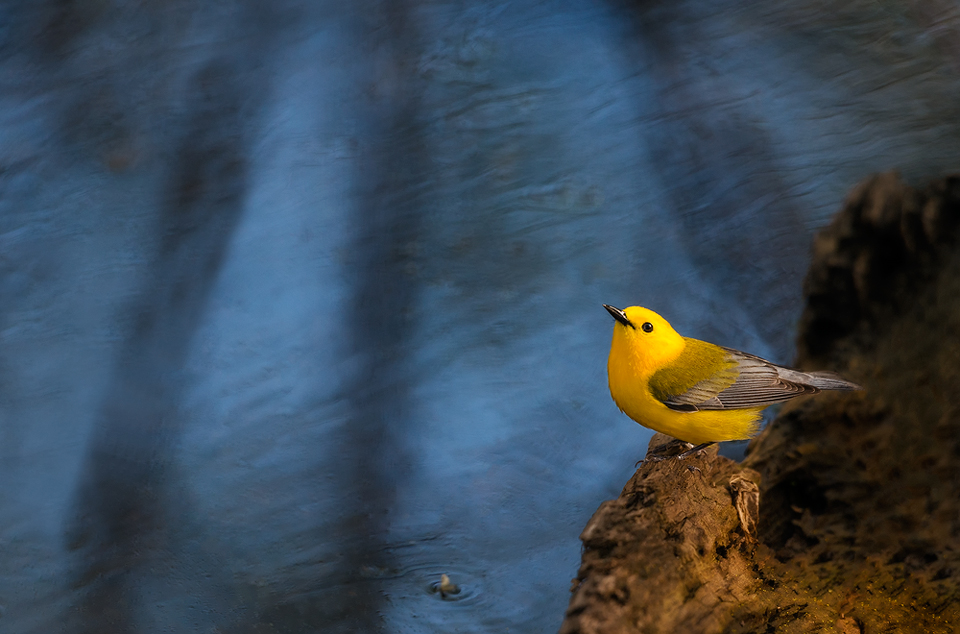
Pools Of Sunshine | Prothonotary Warbler

Pools Of Sunshine | Prothonotary Warbler

If you wish to experience the thrill of the Spring songbird migration I encourage you to add this destination to your future travel plans. I intend to return again next year, until then I’ll enjoy reliving my time there as I continue to process more image files from Magee Marsh. Be sure to watch my Newest Images Portfolio for additional photos from this trip.

Happy Birding!

Your thoughts and comments are always welcome.

- Nathaniel


* Natural subjects in their natural habitat - All of these photos were taken in the wild on natural perches, none of the birds were called or fed.

A moment with Kenn & Kimberly Kaufman

A moment with Kenn & Kimberly Kaufman at Magee Marsh

Review: Naneu Adventure K5-v2 Hiking/Photo Pack

Chronicles of Nature

Field Test of Naneu’s Adventure K5-II at White Sands, New Mexico

I recently took my Naneu Adventure K5-v2 hiking pack out on the road for a field test. My destination? New Mexico’s White Sand Dunes under a full moon. In this particular Park you have two options to access the Park outside of normal hours of operation;

1). Pay the Park Rangers to access the Park after or before its normal hours of operation at the rate of $50 per hour.

2). Pack your gear in to one of their remote campsites and spend the night in the Dunes to experience sunset, the night sky and sunrise.

I chose option two as I wanted to take full advantage of my time in the Park and get away from the casual tourists on the main road. In packing my gear I need to be prepared for a 50 degree temperature swing with highs in the 80’s during the day, and lows dropping all the way down to the 30’s at the coolest point of the night. I also had to consider the possibility of rain in the forecast. Unfortunately the weather was uncooperative on this trip, but I was still able to enjoy the versatility of my new pack. Heavy rain showers blew in one of the days I was there, but the Adventure K5-v2’s rain cover kept all my gear dry. Besides my camera equipment I was also carrying a 2-man backpacking tent, sleeping bag, sleeping mat, rain jacket, change of clothes, water and food for two or three days. Fully loaded my pack weighed over 50lbs, and distributed the weight exceptionally well. While it certainly isn’t weightless, I easily could have carried more gear if needed.

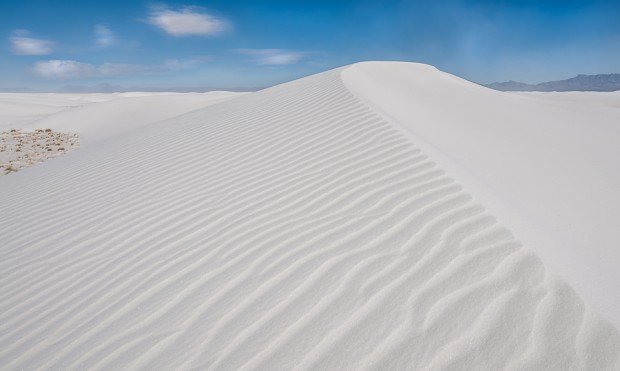
Lines In The Sand | New Mexico

Lines In The Sand | New Mexico

The 80 liter capacity the Adventure K5-v2 offers more space than any other technical, hiking camera pack available. I was pleased to find that its internal frame and ventilated, padded back support was designed with photographers in mind. The spacious main compartment can be accessed from both sides, as well as the top and the bottom. The numerous external pouches and pockets afforded me plenty of additional space to stow a wide variety of items and keep them readily accessible. I like to always have a designated location to store my wallet, keys and smart phone on these trips, the waist straps pockets were perfect for this. An interior pouch on the left side of the pack is designed to hold a large volume water bladder and one elastic pouch on either side perfectly accommodated two Nalgene bottles allowing me to transport plenty of water even in a desert climate. There is a built in system that secured my tripod and didn’t allow it to shift around or hit me in the head.

There were a few features that really sold me on this pack, but perhaps the most notable was the removable camera pod. The Adventure K5-v2 has a dedicated center compartment that fits a separate camera pod for storage of all your fragile camera equipment on long treks. This center compartment is accessible from either side of the pack and is fully collapsible once the camera pod is removed. The pod’s padded interior easily provides storage for my pro DSLR with my 70-200mm lens attached, spare batteries/memory cards, filters, cable release, flash and three additional lenses. The pod’s shoulder straps allowed me to use it as a day pack for shorter hikes and leave the main body of the Adventure K5-v2 behind at my base camp. The pod also clips to the front of the Adventure K5-v2 allowing it to be transported attached on your chest and quickly accessed without having to remove the hiking pack from your back for shooting on the go.

My initial response to this pack is nearly all positive. I will say that if you are not going on an extended, multiple day trek this bag may be more than you need, however that is not to say the Adventure K5-v2 couldn’t be used on single day trips as well. I advised Naneu that I’d like to see the hydration bladder pouch be designed in future production to be a zippered compartment as opposed to a sleeve style pocket. They have taken that feedback and are researching what can be done to address that request. I noticed some shift of the chest strap at times, but have experienced that with other packs as well, so that might just be the nature of life on the trail with 50lbs of gear on your back.

Naneu Adventure K5-II Camera Pod

One of the common complaints made by photographers looking for a good hiking pack is that there are few technical, hiking packs designed to properly carry camera equipment, and camera backpacks are certainly not designed to offer balanced weight distribution for your body over long distances, much less transport camping gear. Naneu left no stone unturned in the design of this pack and the result is an intelligently crafted pack in a class by itself. The Adventure K5-v2 is the perfect fusion of a top of the line camera bag and a technical hiking pack in one. If you’re in the market for a new, large volume, hiking pack and looking to transport your camera gear in a safe, secure way this pack is the answer. If you choose to order one be sure to mention my name at checkout to receive 15% off your order and free shipping.

Visit Naneu’s website for more info.

Your thoughts and comments are always welcome.

- Nathaniel

An Observation Of Ethics

Chronicles of Nature

Call me naïve. I grew up with a fantastic, albeit distorted, ideal of what nature photography was. As a young boy I would sit and pore over the pages of nature photography books, National Geographic and Outdoor Photographer Magazine, enchanted at times more by the thought of what the photographer had to endure in order to capture the photographs, than I was at the images themselves. I guess you could say that to me being a nature photographer was akin to being a hero of sorts. Though my experiences in the world of nature photography have changed my perception of the ways in which certain images are created, I still hold onto my childhood ideal as the standard by which I measure the authenticity of an image. I had my ‘Walter Mitty moment’ at the beginning of 2012 when I was blessed with the opportunity to leave my day job and embrace my career as a nature photographer full time. The longer I’ve been in this field of photography, the more aware I have become of a number of glaring conflicts of ethics that I’d been largely insulated from up until the past decade or so. I’ve listed a few of them below.

The challenges a nature photographer faces when trying to capture a shot in the wild, like this one of a Coyote feeding on a Snowshoe Hare, can be daunting. It was an appreciation for this type of effort that contributed to my earliest interests in nature photography.
© 2014 Nathaniel Smalley

1). I learned of photographers baiting wildlife with food to bring it in close for that ‘award winning shot’. One of the more common practices is to throw a mouse bought at a pet store (or a fake mouse tied to a fishing pole) into the snow in an open field to bring down an owl from a nearby tree where it is roosting. There are few people anymore that will try to defend the practice of baiting a wild bird or animal. Those that do are either ignorant or just plain selfish. It is simply a no win situation for the subject. As nature photographers (and more specifically wildlife photographers) we must ask ourselves why we are baiting our subjects. Feeding wildlife within the respective boundaries of any U.S. national park or wildlife refuge is illegal. In many states, feeding wild animals is punishable by fines and/or imprisonment. Any game warden in the United States will tell you that feeding wildlife causes them to change their natural behavior, teaches the animal to associate humans with food and acclimates them to human dependency. Often disease can be introduced through the food or bait. I’ve heard the argument that baiting owls has saved their lives during hard winter. In response I’d like to say that there are entire agencies and biologists responsible for monitoring and making decisions concerning the health of these species. I don’t see how anyone can justify the practice of baiting a wild subject for photography by saying that they are doing so out of concern for their subject. If you are truly concerned for these species, join a local organization in your area that is responsible for evaluating and caring for them. Baiting a starving subject and then taking pictures of it coming in for food just doesn’t translate to me as someone who cares for the natural world. The bird or animal can also become imprinted and lose it’s natural fear of people, and that never has a favorable result. Baiting animals pretty much always ends up with the animal or bird being killed or imprinted. I’m honestly not sure which of the two is worse. Some people try to compare this to feeding birds at a bird feeder, it is not the same. I have to say that people don’t ‘bait’ songbirds at a bird feeder, they might photograph them while they are there, but that isn’t the reason for feeding songbirds in the first place. Conversely, people didn’t start feeding the owls mice out of concern for them, they did it to get the photo they wanted. Furthermore any ornithological agency would tell you that nearly all the people that feed songbirds seed in the winter do so consistently and without interrupting the food supply. So even if people wanted to make that argument, you can’t even begin to compare baiting owls to feeding songbirds seed at a bird feeder. The fact that the baiters are using a method that jeopardizes the welfare of the owls is simply a base exploitation of the subject. The photographers baiting their subjects are not providing a dependable, consistent supply of food. They show up when they want to, throw out a mouse to get the image they want and then go home to process their images. We have to remember, that even if we as nature enthusiasts would never knowingly harm a wild animal, the birds and animals that get imprinted can’t discern between those that will, and those that won’t harm them. I’ve worked closely with wildlife conservation & rehabilitation agencies for over 20+ years and Audubon for the past decade, filling every role from volunteer to board member and I can tell you for a fact that those types of decisions are best left to the professionals. Regardless of how much we like the outdoors, nature photographers are not biologists. If our actions as nature photographers (i.e. ‘baiting’) is changing the natural behavior of our subjects, can we honestly say that we are “Taking Only Photographs and Leaving Only Footprints”?

2). Staging scenes in a studio can be a practice used by macro photographers to create completely unrealistic settings and positions for small insects, amphibians, reptiles and such. Often the small creatures are damaged in this process and cannot survive once returned to the wild. Hee Jenn Wei published a very informative and equally disturbing blog post on this topic which you can read more about here.

3). Another increasingly common practice is taking images of captive animals and passing them off as wild. The topic of captive wildlife photography is a vast subject and brings with it strong emotions from both sides. Some people say that they don’t have the means to travel to photograph wildlife in their natural habitat and that the animals and birds in their cages and enclosures are still ‘wild’. To prove their point they might ask if you’d be willing to walk into the lion enclosure at the local zoo. Obviously the answer is an emphatic ‘NO’ (or at least I hope it is). Despite the fact that these captive animals are clearly still ‘wild’ in the sense that they could inflict great physical harm if they chose to, there is a distinct difference between these animals and those photographed in the wilderness. For the sake of illustration let’s compare the orcas at SeaWorld to those one might see off the coast of Alaska. For generations now millions of people have gone to SeaWorld and other parks like it and thought, ‘Oh, look at the happy whale!’ With the help and insight provided by the recent expose film Blackfish and the outrage over the capture of two wild orcas for the purpose of being put on ‘display’ at the Winter Olympic Games in Sochi, the public is becoming increasingly aware that this isn’t the case. Not all captive animals in zoos, wildlife parks and such are abused or exploited, in fact many of them are unable to return to the wild for a variety of reasons. These animals provide a great service in helping scientists to better understand them and to educate the public. It isn’t the zoos or wildlife parks that I take issue with, in fact, I don’t even take issue with people photographing these captive animals. The staff at those facilities do vital work in a multitude of ways. The issue is people trying to pass off images of captive animals as ‘wild’. We could take pictures of those whales at SeaWorld and say they are wild, and indeed they are, but those images wouldn’t depict what a happy, wild whale looked like at all. It’s the same thing with images of captive wild animals; they don’t accurately represent the element of freedom and the spirit of a wild animal in its true habitat. Say for example, you capture a picture at the local zoo of a lion feeding off of a carcass in its nicely landscaped enclosure. The lion looks fierce; it growls, defending its ‘kill’. You think that lion looks like a hunter, but you are wrong. What you are looking at is a lion that has had a slab of meat thrown into its concrete enclosure through barred doors. That is what a defeated lion looks like. That is what a lion that couldn’t last a day on the plains of Africa looks like. Attempting to pass off pictures of captive animals as wild animals is unjustifiable.

4). Merging elements from the photographs of totally different subjects and trying to pass it off as one, single exposure image is another trend. In this example you might see an image of a striking sunset and a perfectly located flock of geese in the same photo. Though that isn’t impossible, when you see the same photographer posting image after image with perfectly located flocks of birds flying through their epic landscape shots, it starts to makes you wonder what is really going on. These photos are multi-image composites, plain and simple. However I should take the time to clarify, that there is another technique that involves taking multiple, bracketed images of the same scene, which allows the photographer to capture extended dynamic range and hyperfocal distance that cannot be achieved with a single exposure, but is visible to the human eye. The images are later blended together in photo processing software by a very time intensive process. These types of images, like any photograph, can be over-processed, however the finished result when done with the proper post processing technique applied can create a very realistic image. For those of you that might be wondering, this is not HDR, it is a completely different technique and requires a good deal of post processing skill to be done well. I don’t take an issue with this type of photography or processing. In my opinion this isn’t really any different than stitching together images from a series of panoramic shots. When you stitch a panoramic image together you are working laterally to align all the images side by side, and when blending multiple, bracket exposures, you are working linearly (with depth) to align and blend multiple images of the same subject. So long as the finished product represents what the human eye sees, I believe that this is still an authentic representation of nature photography. For the sake of the uneducated viewer it may still be appropriate in this case for the photographer to relate that exposure blending techniques were employed to achieve the finished image.

A Family Affair | Harris Hawks

Images of a large group of Harris Hawks together on a perch at you local zoo or animal park may be a dime a dozen, finding a similar shot out in the wild might require years to produce the same results. © 2014 Nathaniel Smalley

These and a host of other poor practices are watering down the field of nature photography. They are creating a false expectation of what authentic nature photography looks like within the industry for the photographer, the public, the nature photography awards organizations and the publishers. These practices ’glamorize’ nature photography in a way that becomes incredibly difficult to duplicate when ethical standards of nature photography are upheld. The nature loving family who has bought into all these photos goes on a family camping trip in their favorite national park expecting to view at least some of what they have seen represented in their favorite nature magazine spread or on TV, but they don’t, not even close. All the shots from that magazine article spread or TV nature series were fabrications of reality. Disenchantment sets in and the appreciation for an authentic representation of nature is lost. Granted there are a great number of nature photographers out there that don’t cut corners and don’t take the easy way out, but with each passing day their numbers are depleted. Though the responsibility ultimately rests on the photographer to have the integrity not to engage in these practices, I believe that the publishers and nature photography award organizations bear an equal responsibility not to publish or recognize these images without a disclaimer, if at all. By publishing these ‘counterfeit’ images and passing them off as ‘authentic nature photography’ the publishers and award organizations are seriously compounding the problem and actually encouraging these kinds of practices by the photographers employing these tactics. Over the past decade more and more images that were taken using these practices have been published. In some cases they have even won nature photography awards from organizations and publications that were at one time some of the world’s most respected entities for featuring authentic nature photography. The continued publication and recognition of these types of images makes it increasingly difficult, if not impossible, for the ethical nature photographer to remain competitive in this field. Historically one of the elements that made nature photography so appealing to the public is that not everyone could go out and capture the images that a professional nature photographer was able to. The arrival of the DSLR to some degree eroded the separation that once existed between amateur and professional photographers. It only further devalues the work of the ethical nature photographer to have the recognition, monetary gain and accolades handed over to a photographer that exhibits no integrity in their work. Perhaps it is an impossible task to define ‘true’ nature photography, but ultimately I don’t believe it’s so difficult. All one needs is the drive to create the best image possible when presented with the opportunity, the dedication to represent the image as it was in the wild in your post processing work, and a moral compass that won’t allow you to take cheap shortcuts or cave in to the new ‘norm’. It would be nice if the publishers and nature photography award organizations might make themselves accountable for the same.

Your thoughts and comments are always welcome.

- Nathaniel Smalley

The Image Of Success

Chronicles of Nature

I frequently receive emails and messages asking for direction on how one becomes a successful nature photographer. There’s a lot of discussion between photographers on what makes a successful image. While there are many well tested practices for creating great photographs with which to build a beautiful portfolio, that is only half of the recipe to success. Successfulness in any field is defined by many other important factors. If these factors are ignored you may cripple your attempts to build a career; regardless of the quality of your images. In answer to those that have asked for my advice on the subject I’ve compiled my thoughts into the following ten points.

1). Life Isn’t Fair. Successful photographers don’t waste time wallowing in self pity. Take responsibility for your actions and be thankful for life’s lessons. If something doesn’t work out as you’d hoped, just accept it. Perhaps the negotiations with a potential client that you were excited about fell through. Realize that life is full of mistakes and that this is how we learn. Success is about not being deterred when your plans don’t come to fruition. Evaluate what you could do differently the next time and move on.

2). Stay Focused. You will be challenged at every turn, so be ready for it. Always be in control of your emotions and actions, if you let others put you under their thumb you may never get up again. Don’t allow the rejection of a handful of envious, disgruntled peers send you into fits of depression. If you’ve been used by another photographer or client for their personal gain, remove yourself from the situation and never look back. Always keep your goal in your sights.

3). Change Is Inevitable. Nature photographers are constantly confronted with change, so embrace it. It could be a change in the weather when you’re all prepared for one type of shot, or something more technical like film cameras being replaced by digital. I remember hearing so many photographers say they’d never switch from their 35mm film cameras to digital when that transition began. They all shoot digital now. Our fear should not be of the unknown, but rather of getting stuck in the same routine. Force yourself outside your comfort zone; that is often when we accomplish our greatest work.

4). Don’t Fight It. The only thing you can control in life when faced with a difficult situation is how you respond to the problem. If you drop your lens and it breaks you can respond by getting really pissed off and say your whole trip is ruined, or you can be thankful for the images you were able to record prior to the accident; I’m speaking from personal experience here. If you were responsible and carried insurance on your multi-thousand dollar gear then you wouldn’t have to fret so much. (Now we’re getting back to point number one about taking responsibility for your actions). Points one and four are closely linked. When life hands you rain clouds instead of sunsets, take pictures of the rain clouds and hope for rainbows.

5). Embrace The Challenges. Every successful photographer has taken chances on something at some point in their career, some more than others. Running a profitable business requires you to. I am certainly not saying that you should just recklessly jump into anything, but even buying equipment is a risk. Do you have a business plan before you go and drop five, ten or even fifty thousand dollars on camera gear? If you’ve invested the time in creating a plan to determine the consequences of your decisions before you act, then they become a lot less fearful. A successful photographer is not afraid of uncharted waters.

6). Live In The Present. Living for yesterday is one of the greatest pitfalls for anyone trying to build a future of any kind. While there are certainly valuable lessons to be learned from our past life experiences, you should be careful not to waste too much time and energy in ‘times gone by’. If you want to be a successful photographer put your effort into what you are working on today and tomorrow, not in what you did yesterday.

7). Learn From Your Failures. Not much mystery here. Have you ever gone out and shot a few hundred frames only to realize you forgot to put a memory card in your camera? Don’t do it twice. Even the most successful photographers make mistakes; they also learn from them. You should view every failure as an opportunity to improve yourself. To be a successful photographer you must be willing to correct the future by what you’ve learned in the past.

8). Celebrate The Achievements Of Your Peers. Successful photographers are not afraid of another’s accomplishments. It takes a person with confidence in themselves to find happiness in another’s success. They are not envious or spiteful towards their peers and/or competitors. Congratulate your peers on their achievements, you will draw more people to yourself as a result. There is a vast difference between arrogance and confidence; you never need to apologize for confidence. I’ve seen too many talented, but insecure photographers out there. Don’t be one of them.

9). Be Prepared To Earn It. Don’t expect anything to come to you on a silver platter. Even if you have a beautiful portfolio and have invested thousands of dollars in gear, it doesn’t make you any different than the other millions of photographers out there that have done the same. I’ve heard photographers bitch and moan bitterly that essentially ‘one day the world will recognize them ’. They will be waiting for a long time. Those that are successful make themselves thus and don’t wait for society to realize what a gift they’ve been given by their existence. Do something noteworthy with your work, make your images uniquely your own. Successful photographers don’t wait for the world to recognize them, they are too busy living their dream.

10). It All Takes Time. It has been said that there is no shortcut to success; truer words were never spoken. If you’re expecting to ‘make it’ overnight you should consider a different career path, maybe fast food is more your speed. To be a successful nature photographer you must have commitment and dedication. Your dedication will be tested repeatedly along the way. Keep your head down and work hard. Learn from your mistakes and celebrate your achievements, but be humble about them. Realize that this is a journey, not a destination. Sit back and enjoy the ride.

Your thoughts and comments are always welcome.

- Nathaniel Smalley

Adobe Creative Cloud - The Perfect Storm

Chronicles of Nature

June 17th, 2013 marks the date of perhaps one of the most significant events to affect the photographic industry since the dawn of the digital age. On this date Adobe announced that new releases of their flagship image editing software ‘Photoshop’ would only be available through their ‘Creative Cloud’ as subscription based software with a monthly fee. If you’ve been living under a rock for the past three months this may come as quite a shock. Most photographers have been considering their options for the past ninety days since the announcement, and it has created quite a divide. A large number of top level professionals have turned their backs on Adobe, walking away with no intentions of ever returning; others have not been dissuaded by the announcement, and promptly subscribed to the Creative Cloud. This is a vast topic and as this situation is still evolving I would encourage you to continue to monitor it as it develops.

Why did they do it? Well, from a business perspective the idea is potentially ingenious. Changing the software to a monthly subscription as opposed to a one time download essentially guarantees Adobe a constant revenue stream from their customer base. Up to this point a user could purchase Adobe Photoshop once and continue to use it as long as they wanted without paying for the latest updates. At the time of the release of Photoshop Creative Cloud the monthly subscription fee for current CS6 users was set at $19.99 per month ($29.99 per month for CS3, CS4 and CS5 users). Presumably due to the public outcry, this price was recently reduced to $9.99 per month with a twelve month subscription contract and includes Photoshop CC, Lightroom, Behance Membership with ProSite and 20GB of Cloud Storage. This package is being marketed as Adobe’s Photoshop Photography Program and will be available starting September 17th, 2013. The $9.99 price will only be available to those who already own a version of CS3 (or more a recent release up to and including CS6). This reduced price will only being offered until December 31st, 2013. The monthly subscription fee will cover any updates or new releases to the software and allows the user to access the software on up to two devices. Oddly enough Lightroom is also available outside the Creative Cloud as a one time fee, perpetual license version, as it has always been. Adobe Bridge is a separate item and can be acquired free of charge by Photoshop Creative Cloud subscribers. Bear in mind that this is just the hook… after your first year’s contract there’s no price guarantee. Adobe states that, “The cost of an annual membership will not go up during the first 12 months of your membership. It is possible that the cost of the month-to-month membership will increase, but if it does, you will be notified and given the opportunity to cancel.” Those are not exactly comforting words from Adobe…

Ultimately we are left with three choices:

1).* Subscribe to the Creative Cloud and find a way to include an additional cost into your annual budget, while hoping that Adobe doesn’t put the price out of reach in the future. (This may not be such a big deal to the high volume professional, but to the hobbyist or casual photographer this could exclude them from continuing to use Adobe products).

2).* Choose a different processing software to edit your files with such as Elements, Capture One Pro, Pixelmator, Gimp, etc.

3).* Continue to use your current version of Photoshop and/or Lightroom until Adobe no longer offers support on that version.

* 1). I have some major reservations about option one… Unfortunately I believe this move by Adobe is just the tip of the iceberg. In taking this route I believe Adobe has paved a way for all other software companies to take this step at some point in the future. We see already that Microsoft has a similar option with their Office 365 subscription. Granted you can still purchase Microsoft’s software as a one time fee, perpetual license version, but how much longer will this last? In fact, in May of this year Microsoft Office Director of Communications Clint Patterson wrote in a blog entry that though he agrees with Adobe that subscription software is imminent, Microsoft won’t discontinue packaged software in the near future. Patterson wrote, “Unlike Adobe, we think people’s shift from packaged software to subscription services will take time.”

Adobe states that you don’t need an internet connection to access your Creative Cloud software every day. Members who subscribe on a month to month basis will need to connect with Adobe’s servers every 30 days to “validate their software license”, and every 99 days for annual subscriptions. However, fellow professional photographers that I’ve spoken with who have signed up for the Creative Cloud tell me that they’ve been required to login and validate their software license much more frequently than this. This is a cause of great concern for me as a professional Nature Photographer. I do a great deal of my work in National Parks and remote locations, far from the range of an internet signal for extended periods of time. Often I have my laptop with me on these trips to review and process files in the evening hours. If I’m out on the road and can’t get an internet signal on the day that I’m prompted to connect to Adobe’s servers and ‘verify my software’, am I just not going to be able to access Photoshop until I get somewhere that I can login?

You may have noticed that Adobe offers 20GB of storage in the Cloud with your subscription. What you probably didn’t notice, (unless you read every word in their ‘Terms of Use’ statement), is that by uploading to the Creative Cloud and opting to have your content displayed as ‘Shared Material’ your content becomes their content. Quoting from Adobe’s website it reads: “You grant Adobe a worldwide, royalty-free, non-exclusive, transferable, and sublicensable license to adapt, display, distribute, modify, perform, publish, reproduce, translate, and use Your Shared Material for the purpose of operating and improving the Services and enabling your use of the Services.” While you are not required to use the Creative Cloud storage, (and even if you do you have the option to not share your files), this is a slippery slope and one that I’m afraid far too many will fall prey to due to being uninformed. If you have not reviewed this language I strongly suggest you review sections 9. ‘Your Material’ and 10. ‘Shared Material’ before uploading any images into their Cloud Storage. I’m not accusing Adobe of malicious intent here, but all users should be aware of this agreement before adding their images to the Cloud. If you are interested in reading it you can find their ‘Terms of Use’ here.

* 2). Option two is difficult in that one is faced with learning a whole new image editing software. However the competition is trying to make this an easier transition. Companies like Corel, Xara, Nitro, Nuance, and Pixelmator are taking advantage of the disenchantment Adobe’s customers are feeling since this change from selling Creative Suite perpetual licenses to Creative Cloud subscriptions has been foisted upon them. Corel went so far as to offer a promotion that lets Adobe CS4, CS5, and CS6 users buy Corel software for the ‘upgrade price’ instead of the full price. Many pro photographers speculate that this is a perfect opportunity for a company to come in and sweep up a lions share of the market from Adobe. Google having recently acquired the Nik Software Suite of products is one player that comes to mind as a powerhouse that could challenge for this market if they chose to invest in the process. Nikon’s NX2 editing software give Nikon users the ability to edit RAW files without the use of Adobe products, while Canon offers their users Canon Digital Photo Pro. Topaz also offers an image editing software suite that is popular with some photographers. It should be noted that as of the writing of this article Gimp ( a free image editing software) will open PSD files. Also please note that any image files you’ve edited in Photoshop or Lightroom up to this point, that have been flattened and saved as a TIFF or JPEG file, will be able to be opened by any software that supports those formats.

* 3). As for option three you can continue using Creative Suite products indefinitely, however they will not be eligible for future software updates. Eventually Adobe will no longer offer support for these products. How long will they be supported no one can say. It could be five years, it could be ten years or it could stop tomorrow. Ultimately this option will fail you when the device that is currently running your copy of CS6, for example, dies and you purchase a computer with Windows 9 on it. When you go to download your copy of Photoshop onto your new device you will be told it does not support it. As of right now all previous versions of Adobe Photoshop and Lightroom work with Windows 7 and 8. At that point you will be left with only choices one or two listed above. Lightroom currently continues to be sold outside the Creative Cloud subscription, but odds are this too will go away in the near future and will be only available through the Creative Cloud. Clearly this is the intended future of Adobe’s sales approach.

In conclusion all one can do is make an educated decision that works best for their individual situation, these circumstances are different for each of us. I have worked to compile this information to help you decide what is best for you personally. My hope is that this post helps you to see through the storm created by Adobe Creative Cloud and provides some clarity in this decision making process. Remember, the way we speak the loudest is with our wallets.

Your thoughts and comments are always welcome.

- Nathaniel Smalley

A World Without Colors

Chronicles of Nature

Adult Great Horned owl image, captured near its nest in the Phoenix metro area.

Adult Great Horned owl image, captured near its nest in the Phoenix metro area.

Though the vast majority of my published portfolio is in color, I enjoy working in black and white as well. Color photography began to overtake the market in the mid - 20th century and has effectively left black and white photography as essentially a niche market for photographers who use this medium for artistic purposes. Most professional photographers today would agree that creating an appealing black and white photograph requires much more effort than one in color. Thus the market has been shaped by the influx of color in our profession and changed public perception in ways that few ever anticipated. In 1935 the Eastman Kodak Company came out with its Kodachrome film, a product that revolutionized the photographic industry. Before that time those wishing to capture color images had to deal with heavy glass plates, tripods, long exposures and a painstaking development procedure, despite all this work photographers were left with unsatisfactory results. After dominating the market for decades, Kodak announced in 2009 that it would be discontinuing it’s production of Kodachrome as it now accounted for less than 1% of the company’s revenue. Ironically enough, Kodak is now all but obsolete in the world of digital photography.

Wild Morning Glory found growing along the banks of Oak Creek in Sedona, Arizona.

An intact Datura Flower found growing along the banks of Oak Creek in Sedona, Arizona.

Composing images with the absence of color demands that one be even more mindful of photographic principles. Suddenly things like subject matter, composition, contrast, textures, tones and shading take on a whole new level of importance. In the world of color photography it’s often all too easy to become lax in these areas and rely on colors to persuade the viewer’s eyes into appreciating the image they are looking at. Thanks to our culture of rampant visual stimuli, creating compelling black and white images that will appeal to the general public has become increasingly difficult. A widespread popularity for photos that demonstrate a misuse of color saturation has led to images that rival Lisa Frank’s graphic art, and this can be discouraging for some. However, this doesn’t mean that we shouldn’t exercise ourselves in the discipline of working in a black and white medium.

Winter landscape shot of an Aspen Grove shot near Greer, Arizona.

Winter landscape shot of an Aspen Grove shot near Greer, Arizona.


It was Ansel Adams that said, “A photograph can hold just as much as we put into it, and no one has ever approached the full possibilities of the medium.” If one of the greatest black and white photographers could make such a statement we should take it upon ourselves to see what work we can contribute to this end. Some have said, “A picture is worth a thousand words”… If the greatest poets were able to paint pictures with their words, how much more ought we as photographers be able to create pictures without colors? I encourage you to challenge yourself by composing images in black and white; I’m confident that it will assist in making you a more skilled photographer and help you create in ways you never thought possible. See the world in black and white and throw away those colorful crutches for a while.

Your thoughts and comments are always welcome.

- Nathaniel Smalley

Black and White landscape image taken off Hwy 89 in Montana near Glacier National Park.

Black and White landscape image taken off Hwy 89 in Montana near Glacier National Park.